
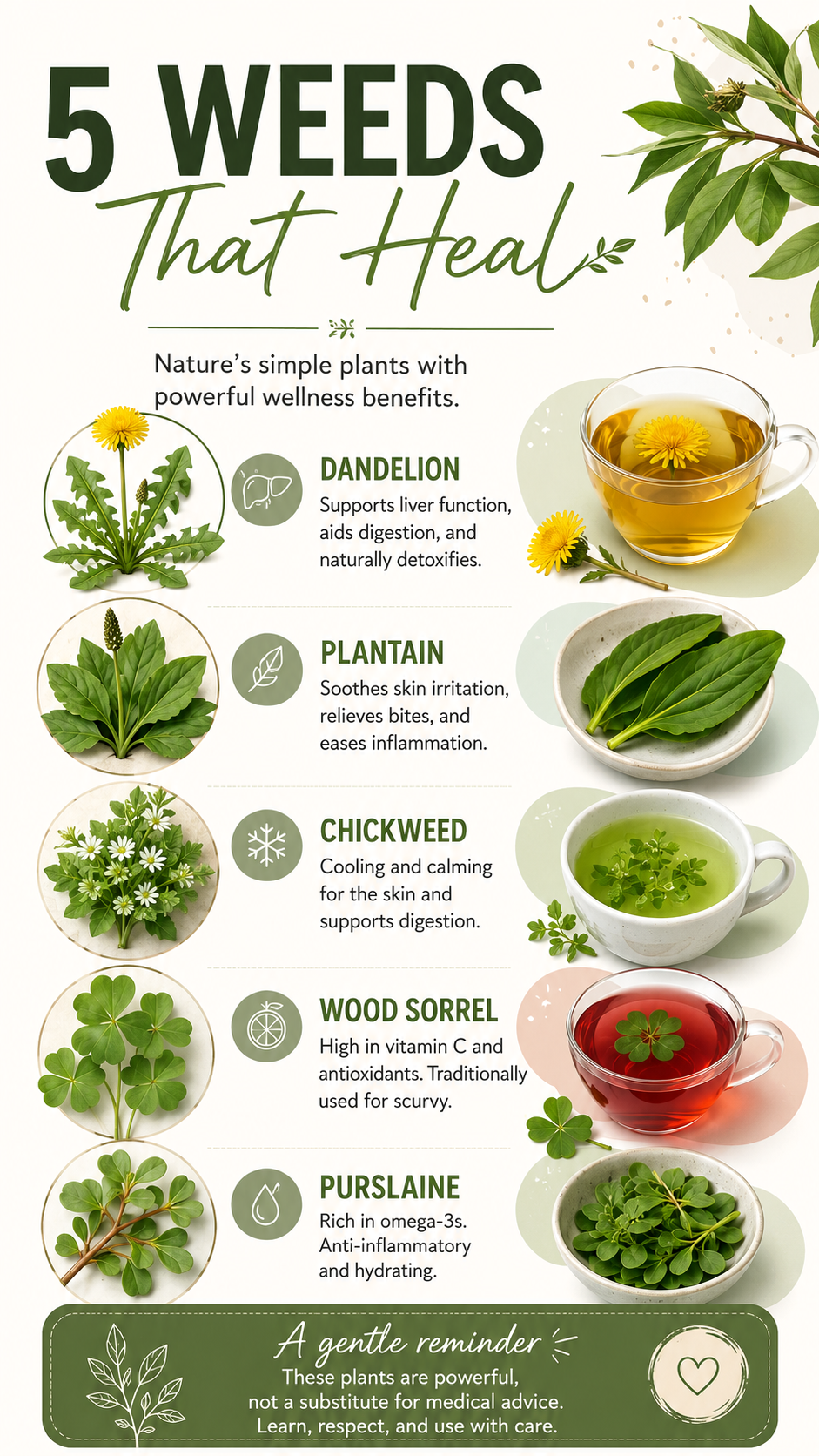
Many of the plants people pull from their gardens, avoid on hiking trails, or dismiss as common weeds have a long history of practical use. Across generations and cultures, certain wild-growing plants have been valued for food, traditional wellness practices, and their remarkable ability to thrive in challenging environments. While modern science continues to study many of these species, their enduring presence in herbal traditions has sparked renewed interest among gardeners, foragers, and natural living enthusiasts.
The idea that a useful plant can grow freely under our feet is both fascinating and empowering. Learning about these plants encourages a deeper connection with nature while helping us recognize the value of biodiversity in everyday landscapes.
Key Takeaways
- Many common weeds have traditional uses in herbal wellness practices.
- Several wild plants are edible and nutrient-rich.
- Proper identification is essential before consuming or using any plant.
- Traditional plant knowledge often combines nutrition and practical remedies.
- Wild plants can contribute to a greater appreciation of local ecosystems.
- Natural remedies should complement, not replace, professional medical advice.
Why People Are Rediscovering Healing Weeds
Interest in wild plants has grown significantly in recent years. Many people are looking for sustainable ways to connect with nature, reduce food waste, and learn traditional skills that have been passed down through generations. As a result, common weeds are being viewed through a different lens.
Instead of seeing them solely as unwanted plants, people are beginning to recognize their ecological value, nutritional potential, and historical significance. Many of these species grow without cultivation, making them resilient examples of nature’s adaptability.
Important: While many wild plants have traditional uses, proper identification is critical. Some edible or beneficial species can resemble toxic plants. Always verify identification using reliable resources before harvesting or consuming anything from the wild.
Dandelion: More Than a Backyard Weed
Dandelion is one of the most recognizable wild plants in the world. With its bright yellow flowers and distinctive jagged leaves, it often appears in lawns, fields, and roadsides.
For centuries, dandelion has been used in traditional herbal practices. Different parts of the plant, including the leaves, flowers, and roots, have found their way into teas, salads, and culinary preparations.
Traditional Uses of Dandelion
- Often used in herbal teas.
- Traditionally associated with digestive support.
- Commonly included in seasonal wellness routines.
- Young leaves are sometimes added to salads and cooked dishes.
The popularity of dandelion demonstrates how a plant considered a nuisance can become a valuable resource when viewed through the lens of traditional knowledge and sustainable living.
Plantain: Nature’s Practical Companion
Plantain, not to be confused with the tropical fruit of the same name, is a widespread wild herb commonly found in lawns, paths, and disturbed soils. Its broad leaves and characteristic flower spikes make it relatively easy to recognize once learned.
For generations, plantain has been appreciated in folk traditions for its soothing qualities. Outdoor enthusiasts and gardeners often regard it as one of the most useful plants growing nearby.
Why Plantain Remains Popular
- Commonly associated with skin-soothing applications.
- Easy to find in many regions.
- Historically used in a variety of traditional preparations.
- Valued for its versatility in herbal traditions.
Its accessibility has helped maintain its place in traditional plant knowledge, making it a favorite among those interested in natural living.
Why This Matters
- Learning about local plants builds confidence in outdoor environments.
- Traditional plant knowledge encourages a stronger connection to nature.
- Understanding common weeds can transform how we view our landscapes.
Chickweed: A Gentle and Versatile Wild Plant
Chickweed is a delicate-looking plant with small leaves and tiny star-shaped flowers. Despite its fragile appearance, it is surprisingly resilient and often grows abundantly in gardens and open spaces.
This plant has long been used in traditional wellness practices and is also known as an edible wild green. Many people appreciate its mild flavor and tender texture.
Characteristics of Chickweed
- Produces small white flowers.
- Often grows in cool, moist environments.
- Traditionally associated with soothing and cooling properties.
- Frequently included in discussions about edible wild plants.
Chickweed highlights the remarkable diversity of useful plants that can flourish with little human intervention.
Pro Tip: Beginners interested in foraging should focus on learning a few highly recognizable plants rather than trying to identify dozens at once. Building confidence gradually helps improve safety and accuracy.
Wood Sorrel: A Tangy Wild Favorite
Wood sorrel is easily recognized by its clover-like leaves and delicate flowers. Its pleasant tart flavor has made it a favorite among foragers and gardeners who enjoy sampling edible wild plants.
The plant contains naturally occurring compounds that contribute to its refreshing taste. Historically, it has been appreciated for both culinary and traditional uses.
What Makes Wood Sorrel Unique?
- Distinctive heart-shaped leaflets.
- Pleasant citrus-like flavor.
- Traditionally associated with vitamin-rich diets.
- Easy to recognize when properly identified.
Its bright taste and appealing appearance make wood sorrel one of the most intriguing wild plants for people exploring natural food sources.
Purslane: The Nutrient-Rich Survivor
Purslane often appears in gardens, sidewalks, and sunny areas where other plants struggle. With its thick succulent leaves and sprawling growth habit, it stands out from many other common weeds.
Among wild edible plants, purslane has gained considerable attention because of its nutritional profile. It has become increasingly popular among gardeners, chefs, and health-conscious individuals.
Benefits Associated with Purslane
- Known for containing beneficial nutrients.
- Frequently discussed in relation to omega-3 fatty acids.
- Adaptable and drought tolerant.
- Can be incorporated into salads and fresh dishes.
Purslane serves as an excellent example of how overlooked plants can offer surprising value when viewed from a nutritional perspective.
The Importance of Responsible Foraging
As interest in edible weeds and medicinal plants grows, responsible harvesting practices become increasingly important. Ethical foraging protects local ecosystems while ensuring that future generations can enjoy the same natural resources.
Guidelines for Safe Foraging
- Learn accurate plant identification.
- Avoid harvesting near roadsides or polluted areas.
- Take only what you need.
- Respect local regulations and private property.
- Leave enough plants behind to support wildlife and regeneration.
Responsible practices help maintain healthy ecosystems while allowing people to enjoy the educational and nutritional benefits of wild plants.
How Healing Weeds Support a Nature-Based Lifestyle
Learning about traditional healing weeds often leads to a broader appreciation of the natural world. Gardeners may begin observing plant diversity more closely. Hikers may become more curious about the species along their trails. Families may explore educational outdoor activities together.
Beyond their practical uses, these plants encourage mindfulness and environmental awareness. They remind us that useful resources often exist in places we overlook every day.
Important: The most valuable lesson from studying healing weeds is not necessarily finding remedies. It is learning to recognize the complexity, resilience, and usefulness of the ecosystems that surround us.
Building Your Wild Plant Knowledge
If you are new to wild plant identification, start with observation. Spend time noticing leaf shapes, growth habits, flowers, and seasonal changes. Field guides, local workshops, botanical gardens, and experienced plant enthusiasts can provide valuable learning opportunities.
Keeping a journal of plants you encounter can help strengthen recognition skills over time. Photography, sketching, and note-taking are excellent tools for building confidence while avoiding unnecessary harvesting.
The journey of learning about wild plants is often as rewarding as the plants themselves. Each species tells a story about adaptation, ecology, and the relationship between humans and the natural world.
At a Glance
- Dandelion is traditionally associated with digestion and herbal teas.
- Plantain is widely recognized for its soothing reputation.
- Chickweed is a popular edible wild green.
- Wood sorrel is valued for its tangy flavor and traditional uses.
- Purslane is appreciated for its nutrient density and resilience.
Conclusion
The world of healing weeds offers a fascinating glimpse into traditional plant knowledge, sustainable living, and the hidden value of everyday landscapes. Dandelion, plantain, chickweed, wood sorrel, and purslane demonstrate that some of nature’s most interesting plants are often the ones growing unnoticed around us.
Whether your interest lies in foraging, gardening, herbal traditions, or simply understanding the natural world more deeply, learning about these resilient species can be both educational and rewarding. By approaching wild plants with curiosity, respect, and proper identification practices, you can gain a greater appreciation for the remarkable resources that nature provides.
Tags
Healing Weeds Wild Plants Foraging Medicinal Plants Edible Weeds Natural Wellness Plant Identification Herbal Traditions