
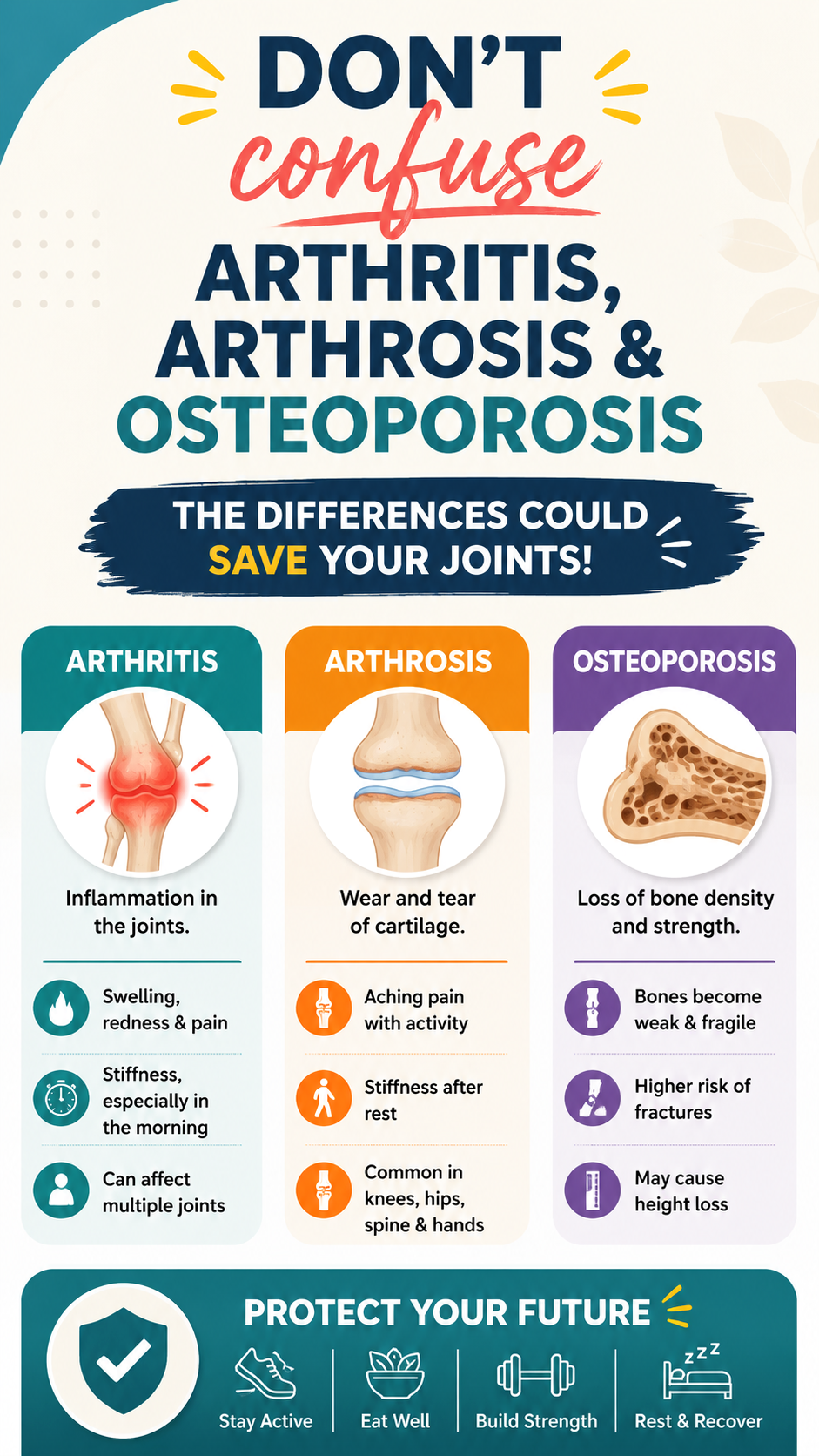
Joint pain, stiffness, and bone weakness are often talked about as if they are the same problem, but arthritis, arthrosis, and osteoporosis affect the body in different ways. Understanding these differences can help you recognize symptoms earlier, ask better questions during a medical appointment, and build habits that support long-term mobility.
These conditions are especially important because they can influence how you move, exercise, sleep, work, and enjoy daily life. A sore knee may come from inflammation, cartilage wear, bone loss, an old injury, or a combination of factors. That is why learning the basics matters. The more clearly you understand what is happening inside the joints and bones, the easier it becomes to choose the right next step.
This guide explains the difference between arthritis, arthrosis, and osteoporosis in a simple, practical way. You will learn what each condition means, how symptoms may feel, what risk factors can play a role, and which healthy habits may help protect your joints and bones over time.
Key Takeaways
- Arthritis usually refers to inflammation in the joints, often with pain, swelling, warmth, or stiffness.
- Arthrosis is commonly linked to joint wear and cartilage breakdown, often called osteoarthritis in many contexts.
- Osteoporosis affects bone density, making bones more fragile and easier to fracture.
- Joint pain does not always mean the same thing, so proper evaluation is important.
- Movement, nutrition, posture, strength training, and medical guidance can all support better joint and bone health.
Why These Three Conditions Are Often Confused
Arthritis, arthrosis, and osteoporosis are often grouped together because they can all affect movement and comfort. They may also become more common with age, which adds to the confusion. However, they do not target the body in the same way.
Arthritis is centered around joint inflammation. Arthrosis is centered around degenerative changes in the joint, especially cartilage wear. Osteoporosis is centered around the strength and density of the bones themselves. One affects inflammation, one affects joint structure, and one affects bone fragility.
Important: Pain location can be misleading. A painful hip, knee, hand, or spine may feel similar from the outside, but the underlying cause can be very different. That is why symptoms should be interpreted together with medical history, physical examination, and, when needed, imaging or lab tests.
What Is Arthritis?
Arthritis is a broad term for joint inflammation. It is not just one condition. There are many types of arthritis, and they can have different causes. Some forms are related to the immune system, some are connected to infection, some follow injury, and others develop alongside wear and tear.
When a joint is inflamed, it may become painful, swollen, stiff, warm, or tender. The stiffness may be worse in the morning or after long periods of rest. Depending on the type of arthritis, symptoms may come and go in flares or slowly progress over time.
Common Signs of Arthritis
- Joint pain that may worsen during flares
- Swelling around the joint
- Morning stiffness or stiffness after rest
- Warmth or tenderness in the affected area
- Reduced range of motion
- Fatigue in some inflammatory forms
Some types of arthritis can affect more than the joints. For example, autoimmune forms may involve fatigue, skin changes, eye symptoms, or other body systems. This is one reason why persistent joint swelling should not be ignored.
Arthritis Is Not Always Caused by Aging
Many people associate arthritis with older adults, but inflammatory arthritis can affect younger adults and, in some cases, children. Age may increase the risk of certain joint problems, but inflammation can happen for many reasons.
That is why it is helpful to pay attention to patterns. Is the joint swollen? Is stiffness worse in the morning? Does movement help or hurt? Are several joints affected at the same time? These details can help guide a healthcare professional toward the right diagnosis.
What Is Arthrosis?
Arthrosis is commonly used to describe degenerative joint disease, especially the gradual breakdown of cartilage inside a joint. Cartilage is the smooth, protective tissue that helps bones glide over each other. When cartilage thins or becomes damaged, movement may become painful, stiff, or restricted.
In many places, arthrosis is closely associated with osteoarthritis. It often affects weight-bearing joints such as the knees, hips, and spine, but it can also affect the hands, fingers, feet, and other joints.
How Arthrosis May Feel
Arthrosis pain often develops gradually. It may feel worse after activity, standing, walking, climbing stairs, or using the joint repeatedly. Some people notice stiffness after sitting, but it may improve once they begin moving gently.
- Aching pain in one or more joints
- Stiffness after inactivity
- Grinding, clicking, or cracking sensations
- Reduced flexibility
- Joint tenderness after use
- Bony changes or enlargement in some joints
Pro Tip: Arthrosis does not mean movement should stop. In many cases, gentle, joint-friendly activity can help maintain flexibility, muscle support, circulation, and confidence. The key is choosing movement that fits the joint, the pain level, and professional advice.
Why Cartilage Health Matters
Healthy cartilage cushions the joint and supports smooth movement. When cartilage wears down, the joint may become less efficient. Muscles around the joint may compensate, posture may shift, and pain can affect how a person walks or moves.
Arthrosis can also be influenced by previous injuries, repetitive strain, excess load on joints, genetics, muscle weakness, and natural aging. While cartilage damage cannot always be fully reversed, symptoms and function can often be improved with a smart care plan.
What Is Osteoporosis?
Osteoporosis is different from arthritis and arthrosis because it affects the bones rather than the joint surface. It causes bones to lose density and strength, making them more fragile. The major concern with osteoporosis is the increased risk of fractures, especially in the hip, spine, and wrist.
Osteoporosis is sometimes called a silent condition because it may not cause obvious symptoms until a fracture occurs. A person may not feel their bones becoming weaker. That is why prevention, screening, and risk awareness are so important.
Possible Signs Linked to Bone Weakness
- Fractures that happen more easily than expected
- Loss of height over time
- Back pain related to spinal compression fractures
- Stooped posture in advanced cases
- Family history of fragile bones or hip fracture
Because osteoporosis may not be painful in the early stages, many people only discover it after a bone density test or a fracture. This makes healthy bone habits valuable long before symptoms appear.
Why This Matters
Arthritis and arthrosis may make movement painful, while osteoporosis may make bones fragile even when pain is not obvious. A person can also have more than one condition at the same time, so a careful diagnosis is essential for choosing the safest treatment, exercise plan, and lifestyle strategy.
Arthritis vs Arthrosis vs Osteoporosis: The Simple Difference
The easiest way to separate these conditions is to think about what they primarily affect.
| Condition | Main Issue | Common Concern |
|---|---|---|
| Arthritis | Joint inflammation | Pain, swelling, stiffness, flares |
| Arthrosis | Cartilage wear and joint degeneration | Aching, reduced movement, joint wear |
| Osteoporosis | Low bone density and bone fragility | Fracture risk, height loss, fragile bones |
Although the differences are clear on paper, real life can be more complex. A person with arthrosis in the knee may also have osteoporosis. Someone with inflammatory arthritis may develop joint damage over time. This is why symptoms should be viewed as clues, not final answers.
Symptoms That Should Get Attention
Occasional aches can happen after exercise, heavy work, or long periods of sitting. However, certain symptoms deserve closer attention, especially if they persist, worsen, or interfere with daily life.
Joint Symptoms to Watch
- Swelling that does not go away
- Stiffness lasting a long time after waking
- Pain that limits walking, gripping, bending, or climbing stairs
- Redness or warmth around a joint
- Sudden severe pain after injury
- Joint changes that affect posture or balance
Bone Health Signs to Discuss
- A fracture after a minor fall
- Noticeable height loss
- New back pain in later adulthood
- Family history of osteoporosis
- Long-term use of medications that may affect bones
Important: Early conversations with a healthcare professional can prevent confusion. Clear diagnosis helps separate inflammatory joint disease, cartilage wear, and bone density concerns, which may require very different approaches.
What Can Increase the Risk?
Risk factors are not guarantees, but they can help you understand why joint and bone health changes over time. Some risks are not controllable, such as age, family history, or past injuries. Others can be influenced through daily habits.
Risk Factors for Arthritis
Arthritis risk depends on the type. Inflammatory arthritis may be related to immune system activity and family history, while other forms may be linked to injury, infection, or joint stress. Persistent inflammation should always be assessed properly.
Risk Factors for Arthrosis
Arthrosis may be influenced by age, previous joint injury, repetitive movement, muscle weakness, higher load on weight-bearing joints, and genetics. Poor alignment or long-term strain can also contribute to joint stress.
Risk Factors for Osteoporosis
Osteoporosis risk may be influenced by aging, hormonal changes, low calcium or vitamin D intake, low body weight, family history, smoking, heavy alcohol use, low activity levels, and certain medications or medical conditions.
Healthy Habits That Support Joints and Bones
While not every condition can be prevented, many daily habits can support stronger bones, healthier joints, and better movement. The goal is not perfection. The goal is consistency, awareness, and choosing actions that match your body’s needs.
Move in a Joint-Friendly Way
Movement helps support circulation, flexibility, balance, and muscle strength. For many people, low-impact activities are easier on sensitive joints. Walking, swimming, cycling, stretching, and guided strength exercises may be helpful depending on the condition and fitness level.
Strengthening the muscles around joints can reduce stress on the joint itself. Stronger legs may support knees and hips. Stronger core muscles may support the spine. Better balance can also lower fall risk, which is especially important for people concerned about osteoporosis.
Prioritize Bone-Supportive Nutrition
Bone health depends on several nutrients, including calcium, vitamin D, protein, magnesium, and other minerals. A balanced diet with dairy or fortified alternatives, leafy greens, beans, fish, eggs, nuts, seeds, and lean proteins can help support overall musculoskeletal health.
Nutrition also plays a role in energy, muscle repair, and inflammation balance. A colorful plate with fruits, vegetables, whole grains, and healthy fats can support general wellness and may complement a joint-friendly lifestyle.
Protect Your Posture and Movement Patterns
Small daily habits can add up. How you sit, stand, lift, carry bags, use stairs, and work at a desk can influence joint strain. Supportive shoes, ergonomic setups, and proper lifting techniques may reduce unnecessary stress on the knees, hips, spine, wrists, and shoulders.
Pro Tip: Do not wait until pain becomes severe to adjust your routine. Gentle changes in footwear, posture, activity pacing, and strengthening can make daily movement feel more manageable over time.
How Diagnosis May Differ
Because arthritis, arthrosis, and osteoporosis affect the body differently, healthcare professionals may use different tools to investigate them. The right assessment depends on symptoms, age, risk factors, medical history, and physical examination.
For Arthritis
A professional may ask about swelling, morning stiffness, fatigue, family history, and symptom patterns. Blood tests or imaging may be considered when inflammatory arthritis is suspected.
For Arthrosis
Evaluation may focus on joint movement, pain with activity, alignment, strength, and imaging when needed. X-rays may show joint space changes or bony changes in some cases.
For Osteoporosis
Bone density testing may be used to assess fracture risk. A professional may also review nutrition, medications, fall history, hormone-related factors, and family history.
Practical Daily Tips for Better Mobility
Whether you are trying to protect your joints, strengthen your bones, or simply stay active with less discomfort, small routines can make a meaningful difference.
- Warm up gently: Give stiff joints time to loosen before more demanding movement.
- Build strength gradually: Muscles help stabilize joints and support balance.
- Choose low-impact options: Activities that reduce pounding may feel better for sensitive joints.
- Support your bones: Prioritize calcium, vitamin D, protein, and regular weight-bearing movement when appropriate.
- Use pain as information: Sharp, worsening, or persistent pain should not be ignored.
- Plan recovery: Rest, sleep, hydration, and pacing are part of joint and bone care.
When to Seek Professional Advice
Self-care can be helpful, but it should not replace medical evaluation when symptoms are persistent or concerning. You should consider seeking professional guidance if joint pain lasts more than a few weeks, swelling is present, movement becomes limited, or pain affects sleep and daily activities.
You should also ask about bone health if you have had a fracture from a minor fall, have risk factors for osteoporosis, notice height loss, or have ongoing back pain that is new or unexplained.
A clear diagnosis can prevent the wrong approach. For example, inflammatory arthritis may require treatments that target inflammation. Arthrosis may benefit from joint support, strengthening, activity modification, and pain management strategies. Osteoporosis care focuses heavily on fracture prevention, bone density, nutrition, and fall-risk reduction.
At a Glance
- Arthritis is mainly about inflammation in the joints.
- Arthrosis is mainly about cartilage wear and joint degeneration.
- Osteoporosis is mainly about weak, fragile bones.
- Symptoms can overlap, so diagnosis matters.
- Smart movement, nutrition, and early care can support long-term mobility.
Conclusion: Know the Difference to Protect Your Movement
Arthritis, arthrosis, and osteoporosis may all affect quality of life, but they are not the same condition. Arthritis involves joint inflammation. Arthrosis is linked to cartilage wear and joint degeneration. Osteoporosis weakens bones and increases the risk of fractures.
Knowing the difference helps you understand symptoms more clearly and take more informed action. Instead of guessing why a joint hurts or why movement feels harder, you can look for patterns, notice warning signs, and seek the right type of support.
The best approach is proactive and balanced. Stay active in ways that suit your body, build strength gradually, support your bones with good nutrition, protect your posture, and do not ignore persistent pain or changes in mobility. Your joints and bones work together every day, and caring for both can help you move with more confidence for years to come.
Tags
Arthritis Arthrosis Osteoporosis Joint Health Bone Health Healthy Aging Mobility Tips Wellness Guide