
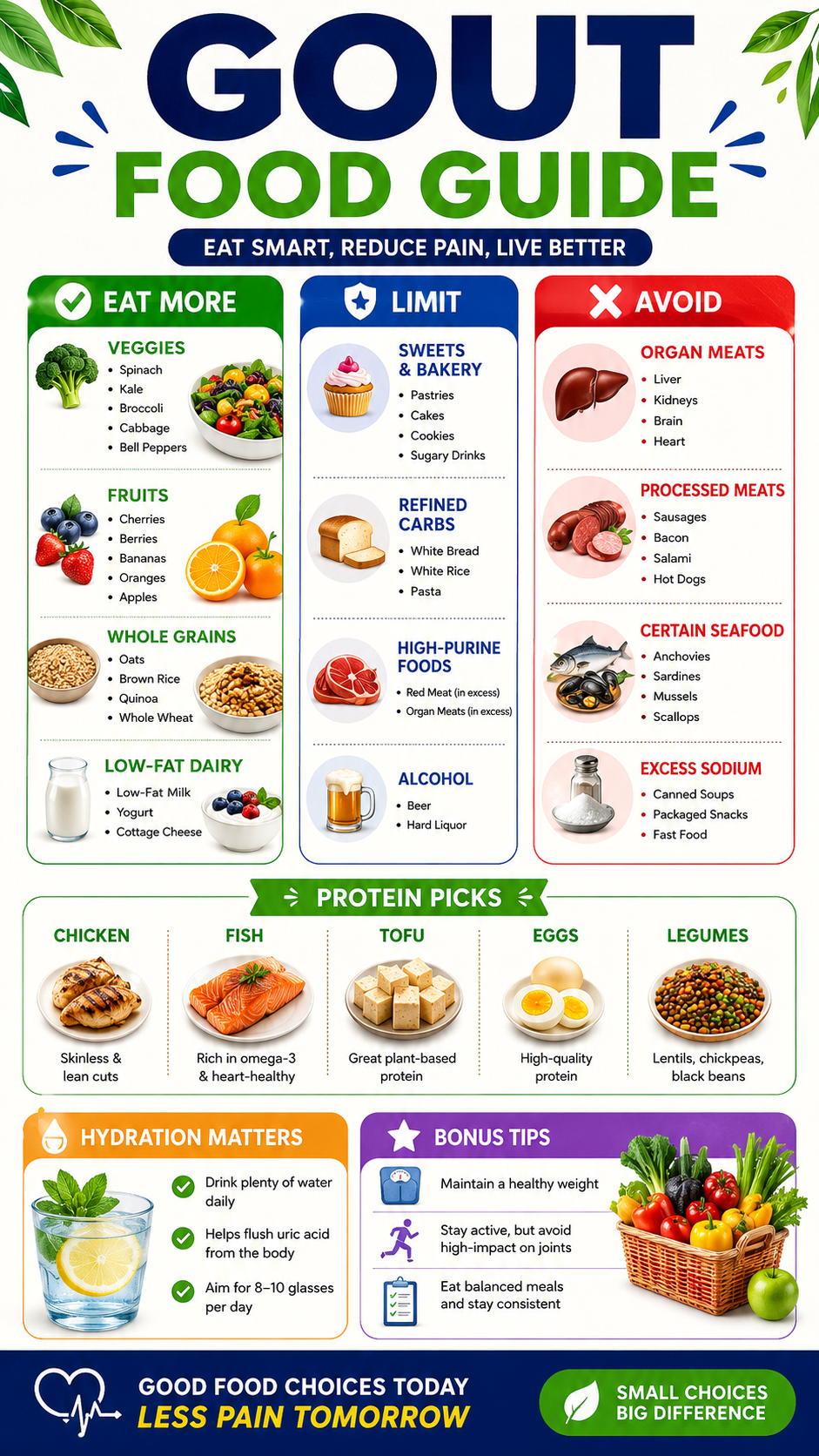
Managing gout can feel overwhelming at first, especially when it comes to choosing the right foods. Fortunately, a clear food guide can make everyday decisions much easier. Gout is a form of inflammatory arthritis often associated with elevated uric acid levels. While medication and professional medical advice play important roles, dietary choices can significantly influence how often symptoms occur and how severe they become.
A well-structured gout food list helps people identify foods that support healthier eating habits, which foods should be limited, and which foods are best avoided. By understanding these categories, individuals can build balanced meals that may help support overall joint health and long-term wellness.
Key Takeaways
- Focus on nutrient-dense foods such as vegetables, fruits, and whole grains.
- Limit foods that may contribute to higher uric acid levels.
- Avoid high-purine foods commonly linked to gout flare-ups.
- Stay hydrated throughout the day.
- Use a simple food chart to make meal planning easier.
- Consistency matters more than occasional dietary changes.
Understanding the Connection Between Diet and Gout
Gout develops when uric acid builds up in the bloodstream and forms crystals in the joints. These crystals can trigger sudden episodes of pain, swelling, and discomfort. Although several factors influence uric acid levels, diet remains one of the most commonly discussed lifestyle considerations.
Many foods contain substances known as purines. When the body breaks down purines, uric acid is produced. Some foods contain higher concentrations of purines than others, making dietary awareness especially valuable for people seeking to manage gout symptoms.
Important: Dietary changes alone may not eliminate gout, but a consistent eating plan can support healthier habits and help individuals make informed choices that align with their wellness goals.
Foods to Eat More Often
One of the most encouraging aspects of a gout-friendly diet is the wide variety of foods that can still be enjoyed. Rather than focusing only on restrictions, it helps to prioritize foods that provide essential nutrients while fitting into a balanced eating pattern.
Vegetables
Vegetables are often at the top of a healthy eating plan. Options such as spinach, kale, broccoli, carrots, cucumbers, tomatoes, and zucchini provide vitamins, minerals, fiber, and antioxidants.
- Rich in nutrients
- Generally low in calories
- Easy to include in daily meals
- Support overall health and wellness
Adding colorful vegetables to lunches and dinners can create satisfying meals while supporting balanced nutrition.
Fruits
Many fruits make excellent additions to a gout-conscious eating plan. Cherries are especially popular among individuals researching gout-friendly foods, but berries, oranges, apples, pears, bananas, and grapes also contribute valuable nutrients.
Fresh fruit offers natural sweetness and can help reduce reliance on heavily processed desserts and snacks.
Low-Fat Dairy Products
Low-fat milk, yogurt, and similar dairy options can fit well into a balanced meal plan. These foods provide protein, calcium, and other nutrients while offering convenient meal and snack options.
Whole Grains and Legumes
Whole grains such as oats, brown rice, quinoa, and barley can help create satisfying meals. Legumes, including lentils and chickpeas, offer plant-based protein and fiber that contribute to a feeling of fullness.
Using whole grains as the foundation of meals can help support healthier eating patterns over time.
Foods to Limit
Not every food needs to be completely eliminated. In many cases, moderation can play an important role. Certain foods may be better enjoyed less frequently or in smaller portions.
Sweet Baked Goods
Pastries, cakes, cookies, and similar bakery products are often high in refined carbohydrates and added sugars. While occasional treats can fit into many lifestyles, excessive consumption may work against overall health goals.
- Cookies
- Cakes
- Pastries
- Sweet desserts
Refined Carbohydrates
Foods such as white bread, white rice, and highly processed pasta products may be worth limiting in favor of more nutrient-dense alternatives.
Replacing refined grains with whole-grain choices often increases fiber intake and promotes better nutritional balance.
Certain Animal Proteins
Some eating plans recommend paying close attention to portions of red meat and other higher-purine protein sources. Balanced meal planning helps ensure adequate protein while avoiding excessive intake from a single source.
Why This Matters
- Small dietary adjustments can add up over time.
- Balanced meals often support better long-term consistency.
- Knowing which foods to limit helps simplify everyday decisions.
Foods Commonly Avoided on a Gout Diet
Many gout food charts highlight certain foods that are frequently associated with higher purine content. These foods are often identified as items people may choose to avoid or significantly reduce.
Organ Meats
Organ meats are commonly listed among foods to avoid in gout-focused eating plans.
- Liver
- Kidneys
- Heart
- Other organ meats
These foods are typically recognized for containing high levels of purines.
Processed Meats
Processed meats are another category often highlighted in gout diet charts.
- Sausages
- Bacon
- Salami
- Pepperoni
Reducing processed foods can benefit overall nutrition while supporting healthier dietary habits.
High-Purine Seafood
Certain seafood varieties frequently appear on lists of foods to avoid due to their purine content.
- Anchovies
- Sardines
- Herring
- Mussels
- Scallops
- Trout
Understanding these categories helps individuals make informed decisions when planning meals or dining out.
Meat-Based Broths and Extracts
Some food guides also caution against concentrated meat extracts, gravies, and certain broths. These ingredients may contribute to overall purine intake and are often considered less suitable for gout-focused eating plans.
Pro Tip: Reading ingredient labels can reveal hidden sources of concentrated meat extracts and processed ingredients that may otherwise go unnoticed.
The Importance of Hydration
Hydration is frequently emphasized in wellness discussions related to gout. Drinking adequate water throughout the day supports normal bodily functions and remains one of the simplest healthy habits people can adopt.
Many individuals find it helpful to carry a reusable water bottle, track daily intake, or pair water consumption with regular activities throughout the day.
- Start the morning with a glass of water.
- Drink water alongside meals.
- Keep water accessible while working.
- Increase hydration during hot weather.
Building a Practical Gout-Friendly Meal Plan
A gout-friendly eating pattern does not have to be complicated. Simple meals often provide the greatest long-term sustainability.
Breakfast Ideas
- Oatmeal with berries
- Low-fat yogurt with fruit
- Whole-grain toast with eggs
Lunch Ideas
- Vegetable salad with grilled chicken
- Lentil soup with whole-grain bread
- Quinoa bowl with mixed vegetables
Dinner Ideas
- Baked chicken with steamed vegetables
- Tofu stir-fry with brown rice
- Grilled fish paired with a fresh salad
Planning meals ahead of time can reduce stress and make healthier choices more convenient throughout the week.
Using a Printable Gout Food Chart Effectively
A printable food chart serves as a practical visual reference that can be displayed in the kitchen, stored in a meal planner, or taken on grocery shopping trips.
Many people find that visual reminders help reinforce healthy habits and reduce uncertainty when selecting foods.
Important: Consistency often produces better results than perfection. Focusing on sustainable improvements can be more beneficial than following overly restrictive eating patterns that are difficult to maintain.
Common Mistakes to Avoid
- Ignoring portion sizes.
- Relying heavily on processed foods.
- Forgetting daily hydration.
- Making drastic dietary changes overnight.
- Failing to plan meals in advance.
Gradual adjustments are often easier to maintain and may encourage lasting healthy habits.
At a Glance
- Choose more vegetables, fruits, and whole grains.
- Limit refined carbohydrates and sugary treats.
- Avoid foods commonly recognized as high in purines.
- Stay hydrated throughout the day.
- Use a printable food guide for easier meal planning.
Conclusion
A clear gout food list can be an incredibly useful tool for making smarter dietary choices. By focusing on nutrient-rich foods, limiting certain items, and avoiding foods commonly associated with higher purine content, individuals can create a practical eating pattern that supports overall wellness.
Simple habits such as increasing vegetable intake, choosing whole grains, staying hydrated, and using a printable gout diet chart can make daily decisions easier. The goal is not perfection but consistency. With thoughtful planning and informed food choices, maintaining a balanced and gout-conscious diet becomes much more achievable.
Tags
Gout Diet Gout Food List Uric Acid Diet Low Purine Diet Healthy Eating Meal Planning Printable Diet Chart Nutrition Guide