
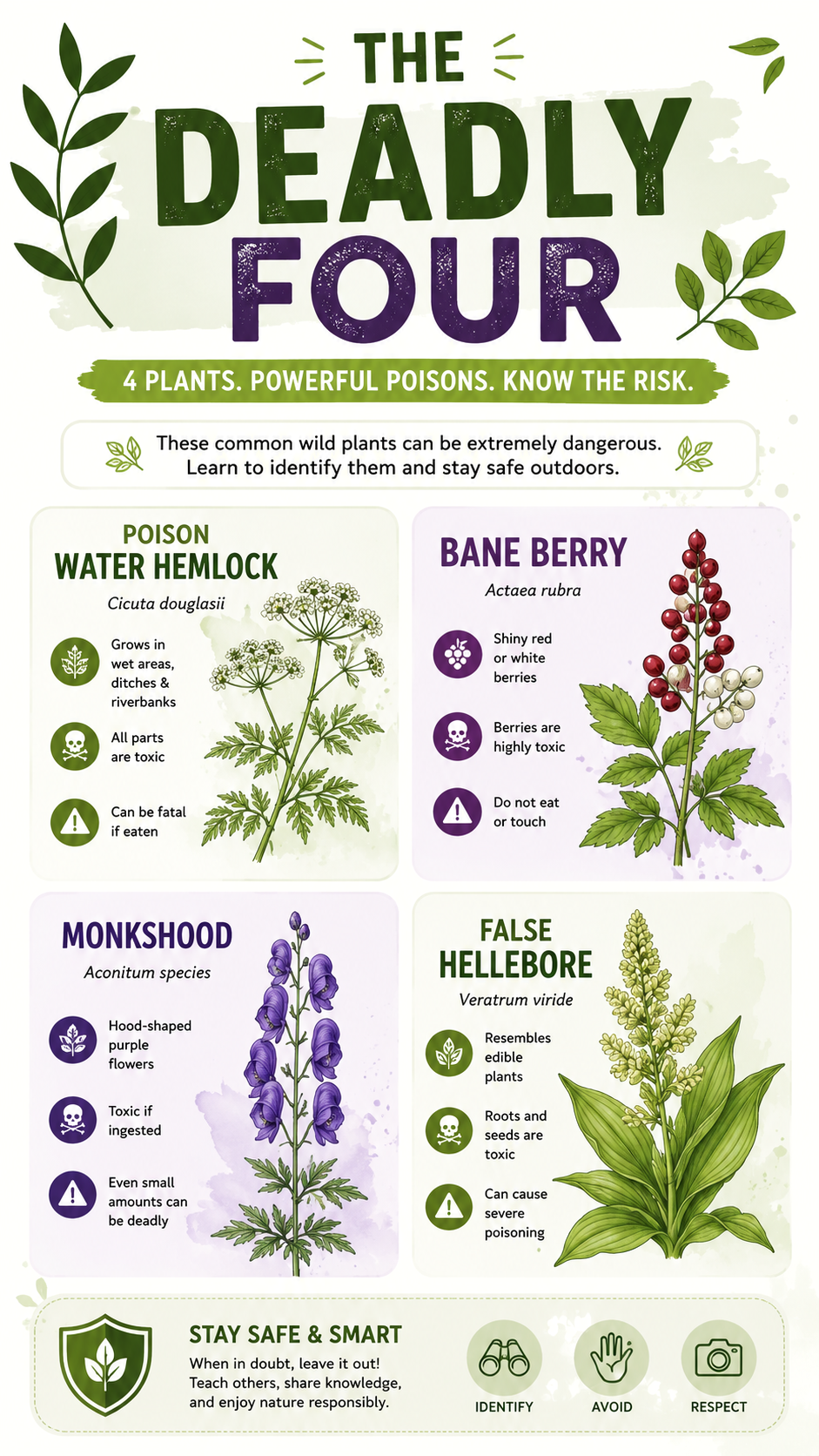
The ability to identify dangerous plants is one of the most valuable outdoor skills anyone can develop. Whether you enjoy hiking, camping, foraging, gardening, wildlife observation, or simply spending time in nature, understanding which plants pose a risk can help prevent serious health consequences. Some toxic species closely resemble harmless plants, making them particularly dangerous for inexperienced explorers.
The poster highlights four well-known poisonous plants often referred to as “The Deadly Four.” Each has unique characteristics, but they share one important trait: they can cause severe illness or even death if mishandled or consumed. Learning to recognize these plants is an essential part of outdoor safety and environmental awareness.
Key Takeaways
- Several common wild plants contain highly toxic compounds.
- Visual identification can help prevent accidental poisoning.
- Many poisonous plants resemble edible or harmless species.
- Avoid touching or consuming unfamiliar plants.
- Education is one of the best tools for outdoor safety.
- Proper plant awareness benefits hikers, campers, and foragers alike.
Why Plant Identification Matters
Nature offers incredible beauty and biodiversity, but not everything growing in the wild is safe. While many plants provide food, medicine, and ecological benefits, others produce toxins as a natural defense mechanism. These toxins can affect the nervous system, digestive system, cardiovascular system, or skin.
Plant identification becomes especially important when foraging. Many poisoning incidents occur because individuals mistake toxic plants for edible ones. In some cases, even small quantities can result in severe symptoms.
Important: Never consume a wild plant unless you are completely certain of its identity. Many poisonous species have lookalikes that can deceive even experienced outdoor enthusiasts.
Beyond ingestion risks, some toxic plants can cause reactions through skin contact. Others may become hazardous when roots, berries, seeds, or leaves are handled improperly. Developing strong observation skills significantly reduces these risks.
Understanding the Four Dangerous Plants
The featured plants represent some of the most notorious toxic species commonly discussed in outdoor education and plant safety resources. Each possesses unique identifying characteristics that make careful observation essential.
Poison Water Hemlock
Poison water hemlock is often considered one of the most toxic plants found in North America. It frequently grows near wetlands, stream banks, marshes, and other moist environments.
Its umbrella-like clusters of small white flowers can appear harmless at first glance. However, the plant contains powerful toxins capable of causing severe neurological symptoms. One of the biggest dangers lies in its resemblance to certain edible members of the carrot family.
Outdoor enthusiasts should exercise extreme caution around any unfamiliar white-flowered plants growing in wet areas. Habitat awareness can be a valuable clue during identification.
Baneberry
Baneberry is notable for its striking berries, which may appear red, white, or cream-colored depending on the species. These attractive fruits can easily draw the attention of children, hikers, and wildlife observers.
Despite their appealing appearance, the berries contain toxic compounds that make them unsafe for human consumption. The plant’s ornamental qualities often cause people to underestimate its dangers.
When exploring forests and woodland habitats, remember that brightly colored berries should never be eaten unless positively identified as safe. Color alone is not a reliable indicator of edibility.
Monkshood
Monkshood is one of the most visually distinctive toxic plants. Its flowers often display deep blue or purple colors and possess a hood-like shape that inspired its common name.
This plant has a long history of notoriety due to its potent toxins. Even minimal exposure can present risks under certain circumstances. Its striking beauty serves as a reminder that attractive plants are not necessarily harmless.
Gardeners and plant enthusiasts who encounter monkshood should admire it from a distance and avoid unnecessary contact.
False Hellebore
False hellebore is characterized by large, broad leaves and impressive flowering stalks. It often grows in moist meadows, mountain environments, and other areas with abundant water.
One reason this plant presents a hazard is its resemblance to certain edible plants during early growth stages. Such similarities can create confusion for inexperienced foragers.
Understanding leaf arrangement, plant structure, and habitat preferences can help distinguish false hellebore from safer species.
Why This Matters
- Many toxic plants resemble edible species.
- Visual identification skills can prevent emergencies.
- Learning local flora improves both safety and outdoor confidence.
Common Mistakes People Make Around Poisonous Plants
Even experienced outdoor enthusiasts occasionally make errors when identifying plants. Understanding these mistakes can help reduce risk and improve decision-making.
Relying on a Single Characteristic
Many people focus on flower color, leaf shape, or berry appearance alone. Accurate identification requires examining multiple characteristics simultaneously.
Assuming Natural Means Safe
One of the most persistent myths is that naturally occurring plants are automatically safe. In reality, nature contains numerous toxins, poisons, and irritants.
Trusting Internet Photos Alone
Images can be helpful learning tools, but photographs do not always capture critical identification details. Regional variations may also create confusion.
Pro Tip: Learn plant identification using a combination of field guides, educational resources, habitat knowledge, and hands-on observation rather than relying on a single source.
Essential Safety Practices for Outdoor Adventures
Whether you’re exploring a local trail or venturing into remote wilderness, a few simple precautions can dramatically reduce exposure to dangerous plants.
- Stay on marked trails whenever possible.
- Avoid touching unknown plants.
- Teach children not to eat berries or leaves found outdoors.
- Carry a reliable plant identification guide.
- Wear gloves when handling vegetation.
- Wash hands thoroughly after outdoor activities.
- Learn the poisonous species common to your region.
These habits create a foundation for safer and more enjoyable outdoor experiences.
The Role of Toxic Plants in Nature
Although toxic plants can be dangerous to humans, they play important roles within ecosystems. Their chemical defenses help protect them from herbivores and environmental pressures.
Many poisonous plants support pollinators, provide habitat for insects, contribute to biodiversity, and participate in complex ecological relationships. Understanding these roles encourages respect rather than fear.
The goal is not to eliminate poisonous plants from natural environments but to recognize them and interact responsibly.
How Educators and Nature Enthusiasts Use Identification Posters
Educational posters remain valuable tools for teaching plant awareness. Their visual format allows learners to compare species, recognize key features, and remember important safety information.
Schools, visitor centers, botanical gardens, hiking clubs, and outdoor education programs frequently use plant identification charts to promote environmental literacy.
By combining illustrations with concise descriptions, these resources make complex botanical information more accessible to beginners.
Important: Educational posters are excellent learning aids, but they should complement comprehensive identification resources rather than replace them entirely.
Building Long-Term Plant Awareness Skills
Plant identification is a skill that develops over time. The more species you learn, the easier it becomes to notice subtle differences in leaves, stems, flowers, fruit, and growth habits.
Consider keeping a nature journal where you document plants encountered during walks and hikes. Recording observations helps strengthen memory and improves recognition abilities.
You can also participate in local nature groups, guided walks, botanical garden programs, and educational workshops. Learning alongside experienced naturalists often accelerates skill development.
With practice, identifying potentially dangerous plants becomes second nature, making outdoor exploration both safer and more rewarding.
At a Glance
- Several wild plants contain powerful toxins.
- Visual identification reduces poisoning risks.
- Never consume unidentified plants or berries.
- Habitat clues can aid accurate recognition.
- Education remains the best prevention strategy.
Conclusion
Understanding poisonous plants is an essential component of outdoor safety. The four featured species serve as important examples of how beautiful, common, or seemingly harmless plants can conceal significant dangers. By learning identification characteristics, respecting unfamiliar vegetation, and practicing responsible outdoor habits, individuals can enjoy nature with greater confidence and awareness.
Knowledge remains the most effective tool for preventing accidental poisoning. Whether you are a hiker, camper, gardener, educator, forager, or nature enthusiast, investing time in plant identification skills will help create safer and more enjoyable experiences in the natural world.
Tags
Poisonous Plants Plant Identification Outdoor Safety Foraging Guide Wild Plants Nature Education Botany Hiking Tips