
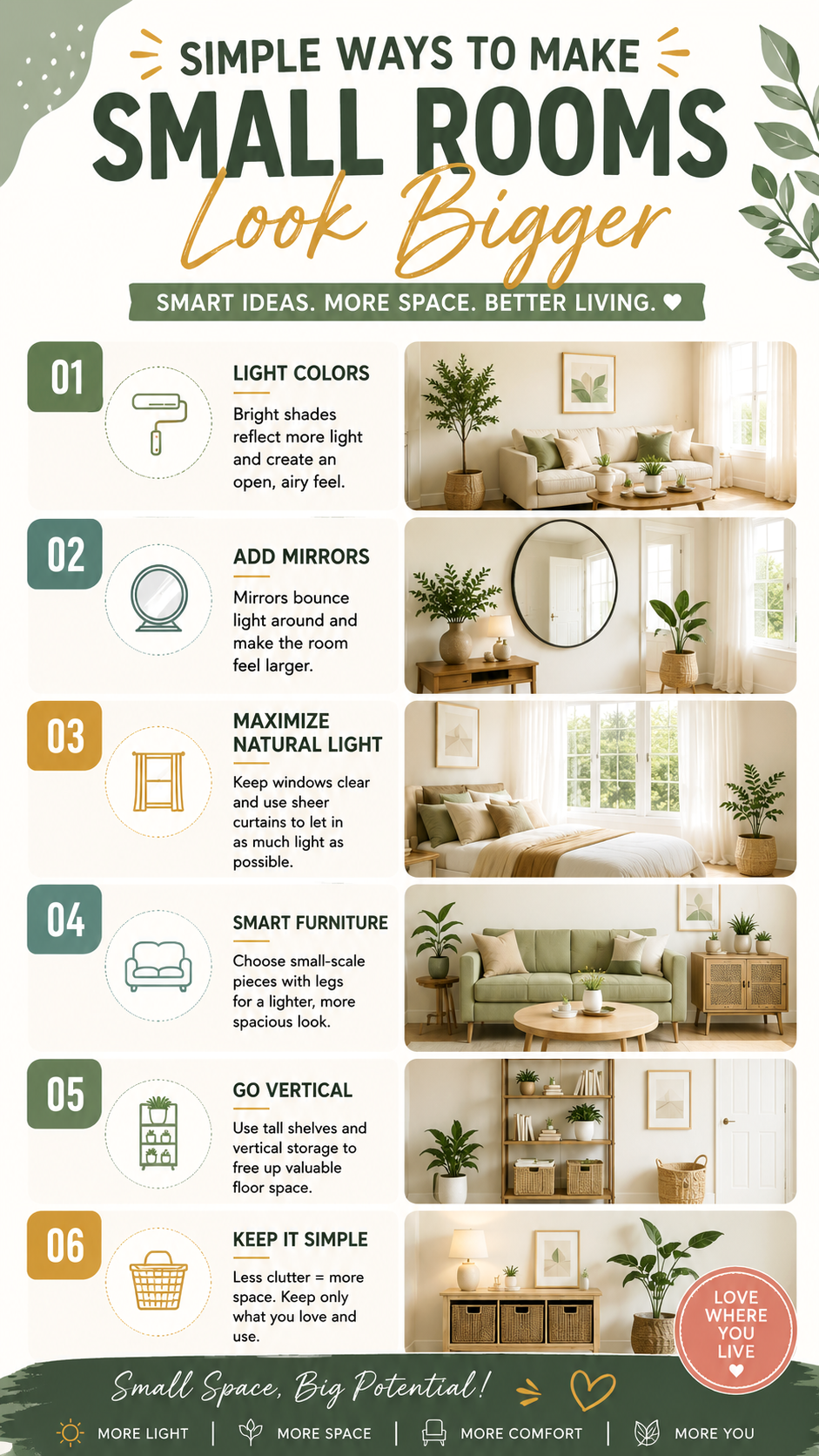
Small rooms often come with big design challenges. Whether you’re decorating a compact apartment, a cozy bedroom, a small living room, or a multifunctional home office, making the space feel open and comfortable can seem difficult at first. The good news is that smart interior design strategies can dramatically change how a room looks and feels without requiring expensive renovations or major structural changes.
By using light colors, maximizing natural light, incorporating mirrors, choosing the right furniture, and reducing visual clutter, even the smallest room can feel brighter, larger, and more inviting. The key is understanding how design elements influence perception and using those principles to your advantage.
Key Takeaways
- Light colors help rooms feel larger and more open.
- Mirrors create the illusion of extra space.
- Natural light dramatically improves room perception.
- Proper furniture scale prevents visual overcrowding.
- Vertical storage maximizes usable space.
- Reducing clutter instantly makes rooms feel bigger.
Why Small Spaces Need Smart Design Solutions
The size of a room isn’t the only factor that determines how spacious it feels. Visual flow, lighting, color choices, furniture arrangement, and organization all influence the way people experience a space.
Many homeowners assume that making a room feel bigger requires knocking down walls or investing in costly renovations. In reality, thoughtful decorating decisions can create remarkable improvements. Strategic design helps maximize every square foot while maintaining comfort and style.
Important: The most successful small rooms focus on creating visual openness rather than simply fitting more items into the available space. Prioritizing breathing room often has a greater impact than adding extra furniture or decor.
Use Light Colors to Open Up a Room
One of the most effective ways to make a room appear larger is through color selection. Light shades naturally reflect more light, helping walls visually recede and creating a sense of openness.
Soft neutrals, warm whites, pale beige tones, light gray shades, and muted greens work particularly well in small spaces. These colors contribute to a bright, airy atmosphere while remaining versatile enough to support various decorating styles.
Best Color Choices for Small Rooms
- Warm white
- Soft ivory
- Light greige
- Pale sage green
- Dusty beige
- Light taupe
- Creamy neutral tones
Painting ceilings in lighter shades can also make rooms feel taller. When walls and ceilings share similar tones, the eye moves more smoothly throughout the room, minimizing visual boundaries.
Avoid Excessive Contrast
While contrast can add character, too many dark accents in a small room may visually divide the space. Instead, use subtle variations within the same color family to maintain continuity and openness.
Harness the Power of Mirrors
Mirrors are among the oldest and most effective interior design tricks for creating the illusion of space. They reflect light, duplicate views, and visually expand room dimensions.
A well-positioned mirror can instantly brighten a room while making it feel significantly larger than its actual footprint.
Strategic Mirror Placement
For maximum impact, place mirrors:
- Across from windows
- Near natural light sources
- Above consoles or sideboards
- Behind seating areas
- At the end of narrow hallways
Large mirrors generally create stronger visual effects than several small mirrors. However, decorative mirror groupings can still contribute texture and interest while reflecting light throughout the room.
Expert Insight
Positioning a mirror opposite a window effectively doubles the visual impact of natural light. This simple adjustment can make even the darkest corner feel brighter and more spacious.
Maximize Natural Light Whenever Possible
Natural light plays a critical role in how spacious a room feels. Bright rooms naturally appear larger, cleaner, and more welcoming.
Heavy drapes, oversized window treatments, and bulky blinds can unintentionally block valuable sunlight. Choosing lighter window coverings helps preserve brightness throughout the day.
Ways to Increase Natural Light
- Use sheer curtains
- Keep windows unobstructed
- Choose reflective surfaces
- Select lighter furniture fabrics
- Use glass or acrylic accent pieces
- Minimize dark window treatments
Natural light not only improves aesthetics but also contributes to a healthier and more uplifting environment.
Pro Tip: If natural light is limited, layer multiple artificial light sources throughout the room. Combining ambient, task, and accent lighting creates depth and prevents dark corners from making the room feel smaller.
Choose Furniture That Fits the Space
Furniture selection is one of the most important decisions when decorating a small room. Oversized pieces can quickly overwhelm a compact space, making movement difficult and creating visual heaviness.
Instead of focusing solely on furniture quantity, pay attention to proportion and scale.
Characteristics of Small-Space Furniture
- Low-profile silhouettes
- Exposed legs
- Streamlined shapes
- Multi-functional features
- Compact dimensions
- Light visual weight
Furniture with visible legs creates the impression of more floor area because the eye can travel beneath the piece. This subtle detail makes a room feel less crowded.
Multi-Purpose Pieces Add Value
Small spaces benefit tremendously from furniture that serves multiple functions. Examples include:
- Storage ottomans
- Lift-top coffee tables
- Beds with built-in drawers
- Expandable dining tables
- Nesting tables
- Storage benches
These solutions maximize functionality without increasing clutter.
Think Vertically to Gain Space
Many homeowners focus exclusively on floor space while ignoring available wall height. Vertical storage allows you to expand organizational capacity without consuming valuable square footage.
Tall shelving units, wall-mounted storage, floating shelves, and vertical bookcases naturally draw the eye upward, creating the perception of taller ceilings.
Vertical Storage Ideas
- Floor-to-ceiling bookshelves
- Floating wall shelves
- Wall-mounted cabinets
- Pegboard organization systems
- Over-door storage solutions
- Tall decorative shelving units
Beyond practicality, vertical elements contribute architectural interest and help rooms feel more balanced.
Important: When using vertical storage, leave some open areas rather than filling every shelf. Negative space prevents visual overload and keeps the room feeling open.
Reduce Clutter for Instant Results
Nothing shrinks a room faster than excessive clutter. Even beautifully decorated spaces can feel cramped when surfaces become overcrowded.
Creating a clutter-free environment doesn’t require minimalism. Instead, it involves being intentional about what remains visible and ensuring everything has a designated place.
Easy Decluttering Strategies
- Store rarely used items out of sight
- Limit decorative accessories
- Use baskets and bins
- Maintain clear countertops
- Organize shelves regularly
- Rotate seasonal decor
A cleaner room automatically feels more spacious because visual distractions are minimized.
Create Visual Flow Throughout the Room
Visual flow refers to how easily the eye moves around a space. Good flow helps a room feel cohesive and larger than it actually is.
Maintaining consistent colors, repeating materials, and avoiding abrupt design interruptions can significantly improve spatial perception.
Simple Ways to Improve Flow
- Use a consistent color palette
- Repeat textures thoughtfully
- Maintain clear walkways
- Avoid blocking windows
- Keep furniture layouts balanced
- Use coordinated finishes
The goal is to create a seamless experience where every design element feels connected.
Decorating Without Overcrowding
Decor gives personality to a room, but too many accessories can reduce the sense of openness. Thoughtful decorating allows small spaces to remain stylish while preserving functionality.
Focus on a few meaningful pieces rather than filling every available surface.
Best Decorative Elements for Small Rooms
- Large framed artwork
- Indoor plants
- Textured throw pillows
- Simple ceramics
- Decorative trays
- Statement mirrors
Choosing fewer but larger decorative pieces often works better than displaying numerous small items.
Small Bedroom Design Tips
Bedrooms benefit greatly from simplicity and thoughtful furniture placement. Keeping bedside tables compact and choosing storage-friendly furniture can maximize comfort without sacrificing style.
Light bedding, layered textures, and unobstructed windows further contribute to a calm and spacious atmosphere.
Small Living Room Design Tips
Living rooms often serve multiple purposes, making efficient planning essential. Select appropriately scaled seating, define focal points carefully, and prioritize open pathways between furniture pieces.
Area rugs, mirrors, and layered lighting can help visually expand living spaces while maintaining warmth and functionality.
At a Glance
- Choose light colors to brighten the room.
- Use mirrors to reflect light and create depth.
- Maximize natural lighting whenever possible.
- Select furniture that fits the room’s scale.
- Utilize vertical storage and reduce clutter.
Conclusion
Making a small room feel bigger is less about square footage and more about smart design choices. Light colors, strategic mirrors, natural lighting, well-scaled furniture, vertical storage, and thoughtful organization work together to transform compact spaces into bright, comfortable environments.
By focusing on visual openness and practical functionality, you can create a room that feels welcoming, stylish, and surprisingly spacious. Whether you’re updating a bedroom, living room, apartment, or home office, these proven techniques can help you unlock the full potential of every inch and enjoy a space that feels larger, lighter, and more beautiful every day.
Tags
Small Room Ideas Space Saving Tips Home Decor Interior Design Small Living Room Bedroom Design Organization Ideas Apartment Decor