
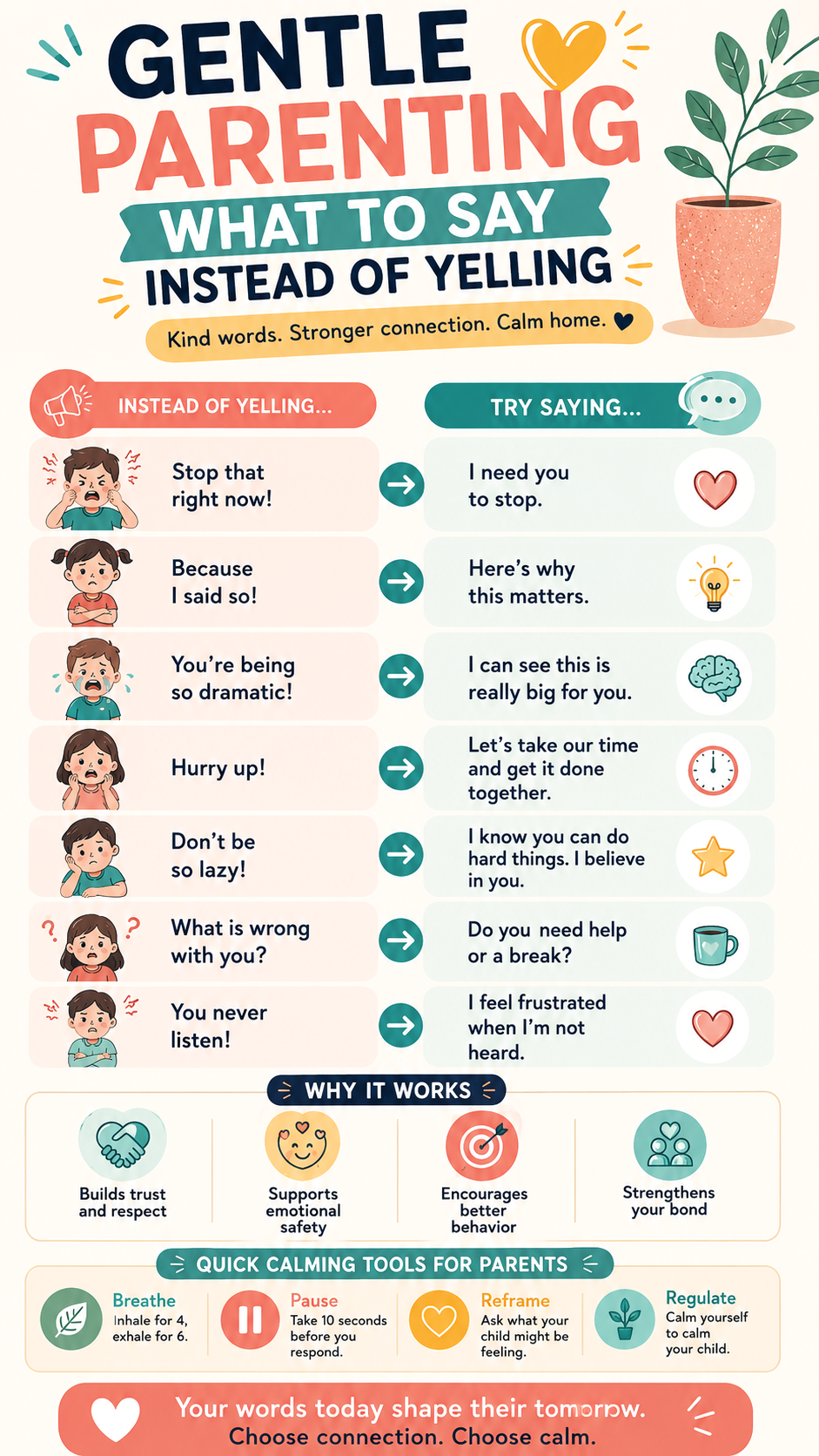
Every parent has moments when emotions run high and patience feels thin. Raising children comes with challenges, and sometimes yelling seems like the quickest response. Yet the words we choose have a powerful influence on how children feel, how they communicate, and how they learn to manage emotions. Gentle parenting does not mean avoiding boundaries. It means teaching with empathy, connection, and respect.
Learning what to say instead of yelling at your child can transform everyday interactions into opportunities for trust, cooperation, and emotional growth. Small changes in language often create big changes in behavior and family relationships.
Key Takeaways
- Words shape children’s emotional development.
- Calm communication encourages cooperation.
- Validation helps children feel understood.
- Positive discipline builds confidence and trust.
- Parents can set limits without yelling.
- Connection often works better than punishment.
Why Words Matter in Parenting
Children are constantly learning from the adults around them. They observe tone, reactions, and communication patterns. While discipline is important, harsh words and yelling can create fear and shame rather than understanding.
Gentle parenting focuses on teaching rather than punishing. Children who feel emotionally safe are often more willing to listen and cooperate.
Important: Children remember how interactions made them feel. Calm and respectful communication helps build trust and strengthens emotional security.
What Happens When Parents Yell?
Yelling is usually a reaction to stress, frustration, or exhaustion. It does not make someone a bad parent. However, repeated yelling can affect children’s confidence and emotional regulation.
- Children may become anxious or fearful.
- Communication may break down.
- Behavior problems can increase.
- Children may learn to respond with anger.
- Trust and connection may weaken.
The goal is not perfection. It is progress. Every family experiences difficult moments, and every parent can learn healthier communication habits.
What to Say Instead of Yelling at Your Child
Instead of: “Stop That Right Now!”
Try saying:
“I need you to stop.”
This approach is clear and firm without adding fear or anger. Children respond better when instructions are direct and calm.
Instead of: “Because I Said So!”
Try saying:
“Here’s why this matters.”
Explaining expectations helps children understand the reason behind rules. Understanding encourages cooperation rather than simple obedience.
Instead of: “You’re Being Dramatic!”
Try saying:
“I can see this feels really big for you.”
Validating emotions teaches children that feelings are normal and manageable. Feeling understood often helps them calm down faster.
Instead of: “Hurry Up!”
Try saying:
“Let’s take our time and do it together.”
Children often move slowly because they are distracted or overwhelmed. Cooperation creates less stress than pressure.
Instead of: “Don’t Be So Lazy!”
Try saying:
“I know you can do hard things. I believe in you.”
Encouraging language promotes confidence and resilience. Children thrive when they feel capable and supported.
Instead of: “What Is Wrong With You?”
Try saying:
“Do you need help or a break?”
Questions that offer support create connection rather than criticism.
Instead of: “You Never Listen!”
Try saying:
“I feel frustrated when I don’t feel heard.”
Using “I” statements models healthy communication and reduces blame.
Why This Matters
- Children need guidance, not shame.
- Empathy helps build emotional intelligence.
- Connection strengthens long-term cooperation.
Gentle Parenting and Emotional Safety
Emotional safety is one of the foundations of healthy child development. Children who feel accepted and understood are more likely to communicate openly and develop self-confidence.
Pro Tip: Validation does not mean agreeing with every behavior. It means acknowledging feelings while still maintaining healthy boundaries.
A child can hear:
- “It’s okay to feel angry.”
- “I won’t let you hit.”
- “I’m here with you.”
- “We can solve this together.”
This combination of empathy and limits teaches emotional regulation and responsibility.
Quick Calming Tools for Parents
Parents need support too. Taking care of your emotions allows you to respond thoughtfully instead of reacting impulsively.
Breathe Slowly
Take a deep breath in and exhale slowly. Even a few seconds can help lower stress.
Pause Before Responding
Giving yourself ten seconds creates space between frustration and reaction.
Reframe the Situation
Instead of asking:
“Why is my child behaving this way?”
Try asking:
“What might my child be feeling right now?”
Looking beneath behavior often reveals unmet needs, fatigue, hunger, or stress.
Regulate Yourself First
Children often borrow calm from adults. A regulated parent can help a dysregulated child return to balance.
Important: Self-care is not selfish. Rest, support, and realistic expectations help parents remain patient and emotionally available.
How to Handle Big Feelings in Children
Meltdowns and emotional outbursts are normal parts of childhood. Young children are still learning how to express emotions effectively.
Acknowledge Feelings
Say:
“It’s okay to feel upset.”
Recognition helps children feel seen and understood.
Set Kind Limits
Say:
“I won’t let you hurt anyone.”
Boundaries create security and consistency.
Offer Choices
Giving options encourages independence.
- “Would you like a hug?”
- “Do you need some quiet time?”
- “Would you like help?”
Stay Present
Children often need connection more than solutions. Simply staying calm and available can be incredibly reassuring.
Daily Ways to Strengthen Parent-Child Connection
Connection does not require elaborate activities. Small moments throughout the day make a lasting difference.
- Spend one-on-one time together.
- Listen without interruptions.
- Read books together.
- Play games and laugh often.
- Create family traditions.
- Offer hugs and words of encouragement.
Strong relationships create the foundation for cooperation and trust.
Remember That Progress Matters More Than Perfection
Every parent loses patience sometimes. Growth happens through awareness and small changes. Replacing yelling with calm communication does not happen overnight, but each positive interaction builds stronger family bonds.
Important: Children do not need perfect parents. They need loving adults who repair mistakes, stay connected, and continue learning.
At a Glance
- Calm words encourage cooperation.
- Validation strengthens emotional safety.
- Boundaries and empathy work together.
- Connection matters more than perfection.
- Small changes create lasting impact.
Conclusion
Learning what to say instead of yelling at your child is not about becoming a perfect parent. It is about choosing words that teach, encourage, and strengthen relationships. Gentle parenting creates opportunities for connection while helping children develop emotional intelligence and confidence.
With patience, empathy, and consistent communication, families can replace power struggles with understanding. The words spoken today shape how children see themselves and how they relate to others in the future. A calm voice, a kind boundary, and a moment of connection can leave a lasting positive impact.
Tags
Gentle Parenting Positive Parenting Parenting Tips Emotional Regulation Positive Discipline Toddler Parenting Child Development Mindful Parenting