
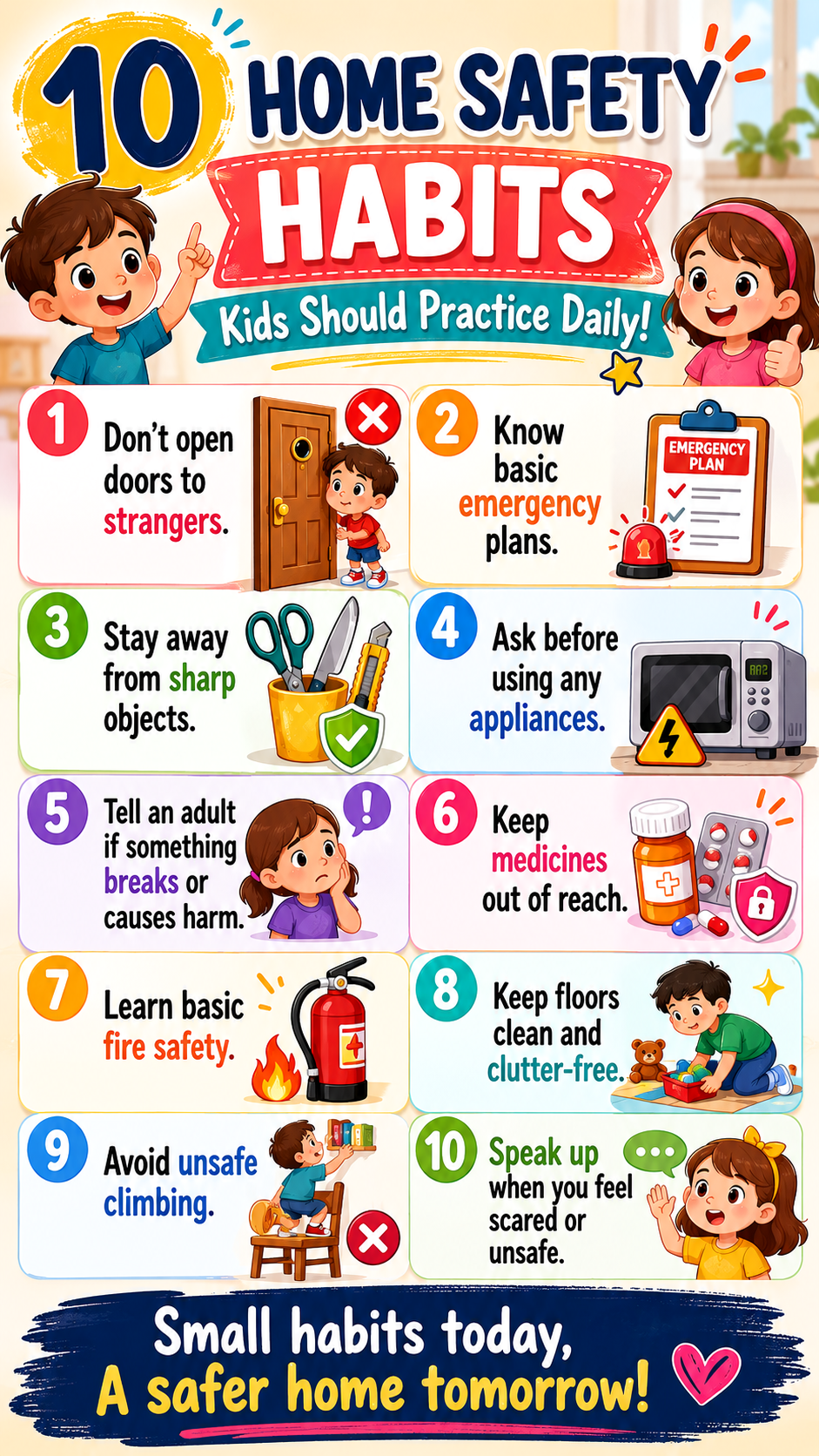
Creating a safe home environment for children goes far beyond locking doors and storing dangerous items out of reach. Safety is built through daily habits that help children recognize risks, make smart choices, and develop confidence in handling everyday situations. When children learn essential safety practices early, they carry those lessons with them as they grow.
From understanding emergency procedures to avoiding common household hazards, simple routines can significantly reduce the risk of accidents. Parents, caregivers, and educators all play a valuable role in teaching and reinforcing these important behaviors. By turning safety into a natural part of everyday life, families can create a home where children feel secure, prepared, and empowered.
Key Takeaways
- Daily safety habits help prevent common household accidents.
- Children learn best through consistent practice and positive reinforcement.
- Emergency preparedness builds confidence and reduces panic.
- Clear family rules create a safer living environment.
- Open communication encourages children to report unsafe situations.
- Safety education should be age-appropriate and ongoing.
Why Home Safety Habits Matter for Children
Home is often viewed as the safest place for children, yet many common accidents happen within the household. Falls, burns, cuts, poisoning incidents, and electrical injuries can occur when children are unaware of potential dangers or do not know how to respond appropriately.
Teaching safety habits helps children understand boundaries while encouraging responsible behavior. Instead of relying solely on adults for protection, children begin developing awareness and decision-making skills that can serve them throughout their lives.
Important: The goal of child safety education is not to create fear. It is to help children recognize risks, make informed choices, and know when to seek help from trusted adults.
1. Never Open the Door to Strangers
One of the first safety lessons many children learn is how to respond when someone knocks on the door. Children should understand that they should never open the door without permission from a parent or trusted adult.
Teach children to:
- Stay away from the door if they are alone.
- Notify an adult when someone arrives.
- Avoid sharing personal information through the door.
- Never tell strangers they are home alone.
Role-playing different scenarios can help children practice safe responses and feel more prepared.
2. Learn Basic Emergency Plans
Emergencies can happen unexpectedly. Children should know what actions to take during situations such as fires, medical emergencies, severe weather events, or power outages.
A family emergency plan should include:
- Important phone numbers.
- Emergency meeting locations.
- Escape routes from different rooms.
- Instructions for contacting trusted adults.
Practice emergency drills regularly so children become familiar with the procedures rather than experiencing them for the first time during a real emergency.
Making Emergency Practice Fun
Children often learn better through games and repetition. Turn safety drills into educational activities that encourage participation without creating anxiety.
3. Stay Away from Sharp Objects
Knives, scissors, tools, and other sharp items can cause serious injuries when handled improperly. Children need clear guidance regarding which objects are safe and which require adult supervision.
Establish household rules about:
- Kitchen knives.
- Crafting tools.
- Gardening equipment.
- Utility tools.
- Broken glass.
As children mature, supervised instruction can help them safely learn to use age-appropriate tools while respecting their potential dangers.
Why This Matters
- Most household injuries can be reduced through awareness and supervision.
- Teaching safety skills early creates lifelong habits.
- Children who understand risks are often more confident and responsible.
4. Ask Before Using Electrical Appliances
Electrical appliances are part of everyday life, but they can present risks when used incorrectly. Microwaves, toasters, blenders, space heaters, and other devices should only be operated with adult approval and guidance.
Children should learn:
- Never to touch appliances with wet hands.
- Not to insert objects into outlets.
- To report damaged cords immediately.
- To unplug devices only when instructed.
Consistent reminders reinforce safe habits and reduce the likelihood of accidents.
5. Report Accidents Immediately
Children sometimes hide accidents because they fear punishment or embarrassment. Unfortunately, delaying communication can make situations worse.
Parents should create an environment where children feel comfortable speaking up when something goes wrong. Whether it is a spill, broken object, injury, or mistake, honesty should be encouraged.
Pro Tip: Praise children for reporting accidents honestly. Positive reinforcement helps build trust and encourages future communication.
Building Trust Through Communication
Children who feel safe discussing problems are more likely to seek help during emergencies and unsafe situations.
6. Keep Medicines Out of Reach and Mind
Medication safety is essential in households with children. Young children may mistake medicine for candy or assume that anything adults take must be safe.
Important medication safety practices include:
- Storing medicine in locked cabinets.
- Keeping containers clearly labeled.
- Avoiding references to medicine as candy.
- Teaching children never to take medication without adult approval.
Children should understand that even common medications can be dangerous when used improperly.
7. Understand Basic Fire Safety
Fire safety education can save lives. Children should learn the difference between safe and unsafe uses of fire while understanding the importance of prevention.
Key fire safety lessons include:
- Never playing with matches or lighters.
- Recognizing smoke alarms.
- Knowing emergency exit routes.
- Understanding how to respond during a fire emergency.
Regular family discussions help reinforce these lessons without overwhelming younger children.
Practicing Fire Escape Plans
Walk through escape routes together and identify safe meeting spots outside the home. Repetition helps children remember what to do under pressure.
8. Keep Floors Clear and Organized
Trips and falls remain among the most common causes of childhood injuries. A clutter-free home significantly reduces these risks.
Encourage children to:
- Put toys away after use.
- Keep backpacks off walkways.
- Store shoes properly.
- Clean up spills immediately with adult assistance.
These simple habits improve both safety and household organization.
Important: Safety and responsibility often go hand in hand. Teaching children to keep their spaces tidy helps reduce accidents while encouraging accountability.
9. Avoid Unsafe Climbing
Children are naturally curious and often seek higher viewpoints or hard-to-reach objects. Unfortunately, climbing on furniture, countertops, shelves, and windows can result in serious falls.
Parents should establish clear climbing rules and explain why certain surfaces are unsafe.
Helpful alternatives include:
- Using child-safe step stools when appropriate.
- Asking adults for assistance.
- Keeping frequently used items within reach.
- Securing furniture to walls when necessary.
10. Speak Up When Something Feels Unsafe
Perhaps the most important habit children can develop is trusting their instincts and communicating concerns. If something feels wrong, confusing, or uncomfortable, children should know they can always talk to a trusted adult.
This lesson extends beyond physical safety. It encourages emotional awareness, self-advocacy, and confidence.
Teach children that it is always acceptable to:
- Ask questions.
- Seek clarification.
- Report concerns.
- Request help.
- Say no when appropriate.
How Parents Can Reinforce Daily Safety Habits
Consistency is one of the most effective teaching tools. Safety lessons become habits when they are practiced regularly and modeled by adults.
Parents can strengthen safety awareness by:
- Setting clear household rules.
- Leading by example.
- Having regular safety discussions.
- Recognizing positive behavior.
- Reviewing emergency procedures periodically.
Children are more likely to remember safety lessons when they see adults practicing the same behaviors.
Creating a Safety-First Family Culture
Rather than treating safety as a one-time lesson, make it part of daily family life. Small conversations during ordinary moments often have the greatest impact over time.
At a Glance
- Teach children to avoid opening doors to strangers.
- Practice emergency plans regularly.
- Keep sharp objects and medicine inaccessible.
- Encourage honest communication about accidents.
- Help children recognize and report unsafe situations.
Conclusion
Teaching home safety habits is one of the most valuable investments parents can make in their children’s well-being. The simple actions children practice every day can significantly reduce accidents, improve decision-making skills, and increase confidence during challenging situations.
From learning basic emergency plans to speaking up when something feels unsafe, each habit contributes to a stronger foundation of awareness and responsibility. By introducing these lessons early and reinforcing them consistently, families can create safer homes and help children develop skills that will benefit them for years to come.
Tags
Home Safety Kids Safety Child Safety Tips Family Safety Parenting Advice Safety Education Home Accident Prevention Child Development