
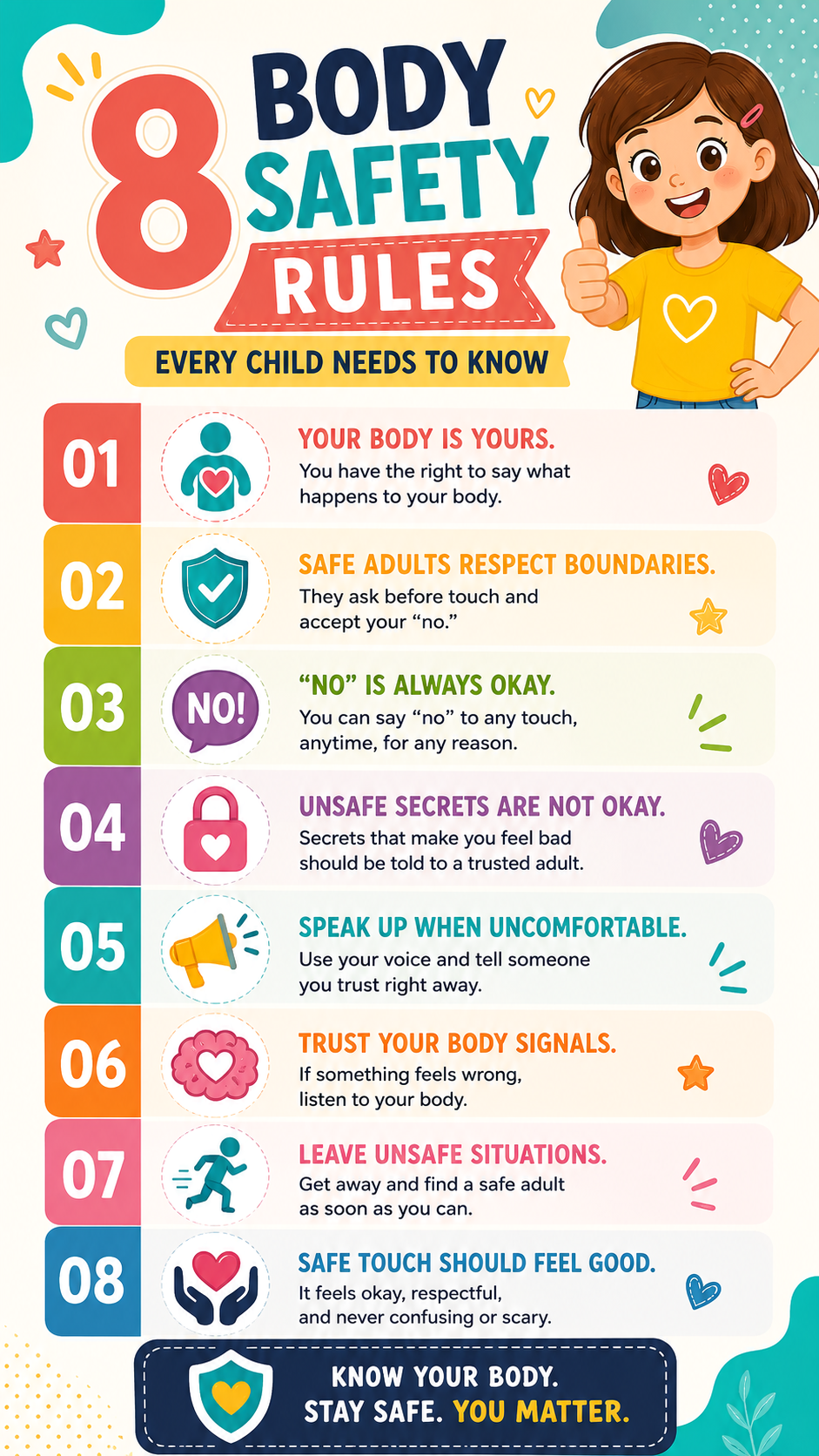
Teaching children about body safety is one of the most meaningful ways parents, caregivers, and educators can help them grow with confidence and security. Body safety education is not about creating fear. It is about giving children simple, age-appropriate tools to understand personal boundaries, recognize uncomfortable situations, and know that they can always reach out to trusted adults for support. When these conversations happen naturally and regularly, children are better prepared to navigate everyday interactions with confidence.
Many families find it difficult to know when or how to begin discussing personal safety. The good news is that these lessons can start early and become part of normal daily conversations. By using clear language, encouraging questions, and reinforcing healthy boundaries, adults can help children develop lifelong safety skills that protect both their emotional and physical well-being.
Key Takeaways
- Body safety education helps children understand healthy personal boundaries.
- Teaching children they can say “no” builds confidence and self-respect.
- Open communication encourages kids to share worries or uncomfortable experiences.
- Trusted adults play a vital role in reinforcing safety lessons consistently.
- Regular conversations are more effective than one-time discussions.
Why Body Safety Education Matters
Children learn about the world through the people around them. They are taught how to cross the street safely, wear a helmet, and avoid strangers in dangerous situations. Personal body safety deserves the same attention. Understanding that their body belongs to them and that they have the right to set boundaries is a fundamental life skill.
Body safety education also strengthens a child’s ability to communicate. When children know the correct words to describe their feelings and experiences, they are more likely to seek help if something does not feel right. They learn that asking questions is okay and that trusted adults are there to listen without judgment.
Important: Body safety conversations should be ongoing, calm, and age-appropriate. A child who hears these messages regularly is more likely to remember them and feel comfortable speaking up when needed.
1. Your Body Belongs to You
One of the first and most important lessons children can learn is that their body belongs to them. This simple idea helps establish personal autonomy and self-respect from an early age.
Children should understand that they have a say in what happens to their body. This includes everyday situations such as choosing whether they want to give a hug, high-five, or wave hello. Respecting these choices teaches them that their feelings matter.
How to Reinforce This Message
- Allow children to choose alternative greetings if they do not want physical contact.
- Use phrases like, “Your body is yours, and you get to decide about safe touches.”
- Praise children for expressing their preferences respectfully.
2. Safe Adults Respect Boundaries
Children should know that trustworthy adults listen and respect personal boundaries. Safe adults ask permission when appropriate and understand when a child says they are uncomfortable.
This lesson helps children distinguish between respectful behavior and actions that ignore or pressure their boundaries. It also reinforces that adults should never ask children to keep uncomfortable physical interactions secret.
Why This Matters
- Children learn that respect is a normal part of healthy relationships.
- They become more confident recognizing situations that feel inappropriate.
- They understand that trusted adults will support and believe them.
3. Saying “No” Is Allowed
Many children naturally want to please adults, making it important to teach them that saying “no” is acceptable when they feel uncomfortable. They should know that they can refuse unwanted touch, even if it comes from someone they know.
Parents and caregivers can practice this skill through simple role-playing activities. Asking questions like, “What could you say if you did not want a hug?” helps children build confidence using their voice.
Simple Phrases Children Can Practice
- “No, thank you.”
- “I do not like that.”
- “Please stop.”
- “I need to tell my parent or teacher.”
Pro Tip: Practice body safety phrases during everyday play. Repetition helps children feel more prepared to use these words in real situations.
4. Unsafe Secrets Should Always Be Shared
Teaching children the difference between a surprise and a secret is an effective way to encourage healthy communication. A surprise, like a birthday gift, is usually happy and temporary. A secret that causes fear, sadness, or discomfort should never be kept.
Children should know that they will not get in trouble for telling a trusted adult about something that worries them. Creating a family culture where honesty is welcomed makes these conversations easier.
Encourage Open Conversations
Set aside time each day to ask simple questions such as:
- What was the best part of your day?
- Did anything make you feel uncomfortable?
- Is there anything you want to talk about?
These routine check-ins show children that sharing their thoughts and feelings is normal and encouraged.
5. Speak Up When Something Feels Wrong
Children should understand that they can always talk to a trusted adult if something makes them feel confused, scared, or uneasy. They do not need to have proof that something is wrong. Their feelings are important.
Helping children identify a network of trusted adults can make this lesson more practical. This might include parents, grandparents, teachers, school counselors, or close family friends.
Create a Trusted Adult List
- Parent or guardian
- Teacher or school staff member
- Grandparent or close relative
- Family friend approved by parents
- Coach or mentor known to the family
6. Trust Your Body Warning Signs
Even young children can recognize physical and emotional signals that something feels wrong. A racing heart, upset stomach, nervous feeling, or desire to leave a situation can all be important clues.
Teaching children to pay attention to these natural warning signs helps them trust their instincts. Adults can explain that everyone has an inner sense that helps protect them and that listening to those feelings is okay.
Important: Children should never be told to ignore feelings of fear or discomfort simply to avoid hurting someone’s feelings. Respecting personal instincts is an important part of body safety education.
7. Leave Unsafe Situations Quickly
Another valuable lesson is that children do not have to stay in a situation that feels unsafe. If they feel uncomfortable, they should know they can leave and find a trusted adult as soon as possible.
Role-playing different scenarios can make this easier to understand. For example, practice what to do if a child feels uneasy at a playground, social event, or unfamiliar gathering. Having a simple plan builds confidence and reduces uncertainty.
Practice a Family Safety Plan
- Identify safe adults in common places.
- Teach children where to go if they need help.
- Agree on a family code word for emergencies.
- Reassure children they can always call or ask for help.
8. Safe Touch Should Never Feel Scary
Children benefit from understanding the difference between safe, caring touch and touch that causes fear, confusion, or discomfort. Safe touch is respectful, appropriate, and never meant to frighten or pressure a child.
It is equally important to explain that children can talk about any touch that makes them feel uneasy, even if they cannot explain exactly why. Adults should listen carefully, remain calm, and take their concerns seriously.
Expert Insight
Body safety education is most effective when it is woven into everyday parenting. Short, positive conversations throughout the year help children remember key lessons and understand that they can always ask questions.
How Parents and Caregivers Can Build Confidence
Body safety education is not only about preventing unsafe situations. It is also about helping children develop confidence, self-esteem, and healthy communication skills. Children who know their opinions matter are often more willing to express concerns and seek support.
Parents can model respectful boundaries by asking for permission before certain forms of physical affection and by respecting a child’s answer. This simple behavior demonstrates that consent and kindness go hand in hand.
Everyday Ways to Reinforce Body Safety
- Read age-appropriate books about emotions and personal boundaries.
- Talk openly about feelings and encourage questions.
- Use correct names for body parts in a calm, matter-of-fact way.
- Praise children for communicating honestly.
- Review family safety rules regularly.
Creating a Safe and Supportive Environment
Children thrive when they know they are heard, respected, and protected. Building a safe environment means creating open lines of communication where kids feel comfortable discussing both happy moments and difficult experiences.
It is helpful to remind children that they can always come back and talk again, even if they forgot to mention something earlier. Knowing that support is always available strengthens trust between children and the adults who care for them.
Families, schools, and communities all play an important role in promoting child safety awareness. When adults work together to reinforce consistent messages about respect, boundaries, and communication, children receive the guidance they need to feel secure.
At a Glance
- Teach children that their body belongs to them.
- Encourage them to say “no” when they feel uncomfortable.
- Help them identify trusted adults they can talk to.
- Explain that unsafe secrets should always be shared.
- Reinforce these lessons through regular, supportive conversations.
Conclusion
Body safety education gives children practical tools that can stay with them for life. By teaching respect for personal boundaries, encouraging open communication, and reminding children that they can always ask for help, parents and caregivers create a foundation built on trust and confidence.
These conversations do not have to be complicated or overwhelming. Small, regular discussions, combined with everyday examples of kindness and respect, can make a lasting difference. When children know they are valued, listened to, and supported, they are better prepared to navigate the world safely and confidently.
Tags
Child Safety Body Safety Rules Personal Safety for Kids Parenting Tips Healthy Boundaries Kids Wellbeing Family Education Safety Awareness