
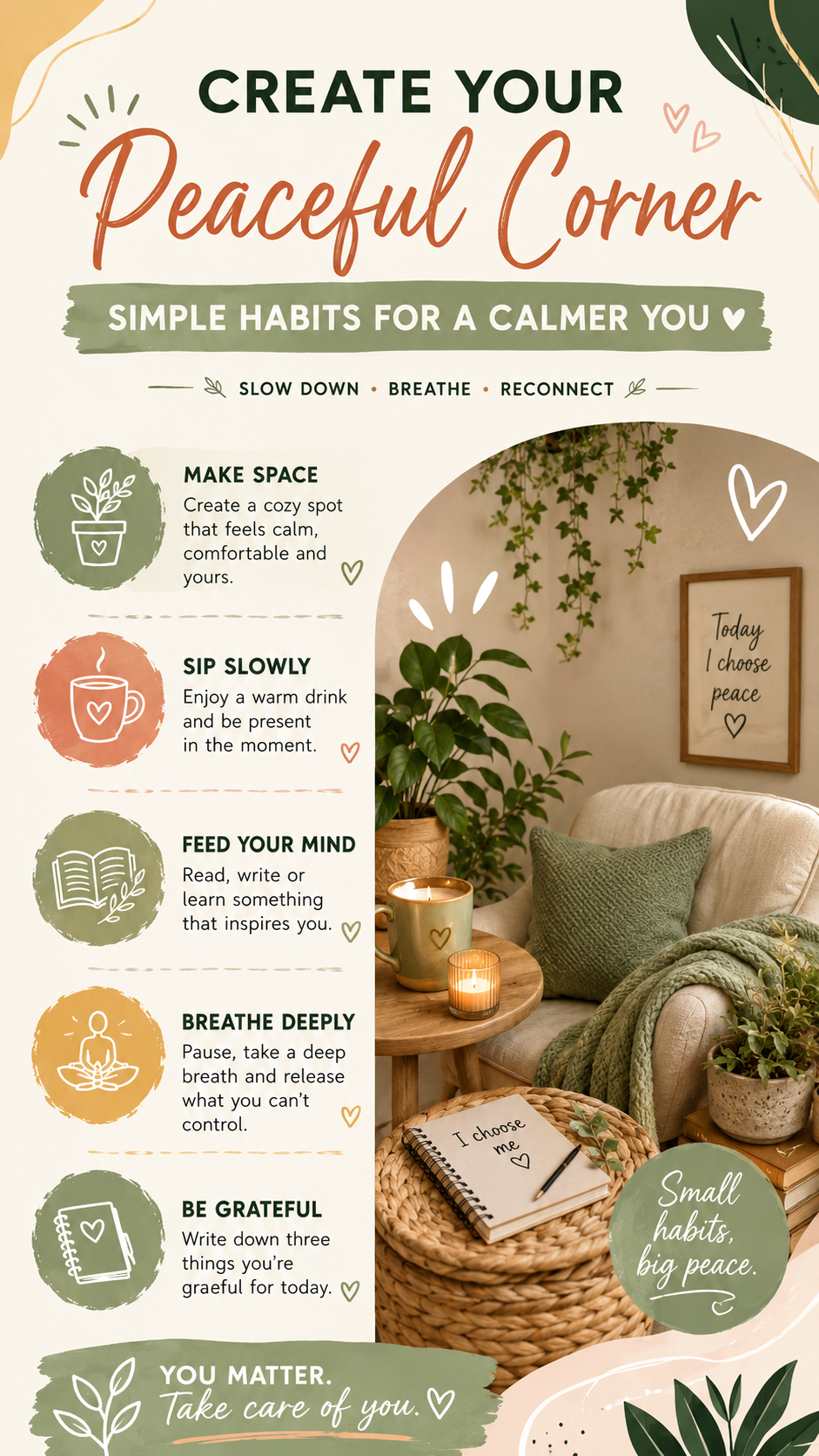
In a world filled with notifications, endless to-do lists, and constant distractions, creating moments of peace has become more important than ever. A calm and cozy home environment can do more than look beautiful. It can support emotional well-being, reduce stress, and encourage a healthier relationship with daily life. Whether you live in a large house or a small apartment, designing a space that promotes inner peace can help you reconnect with yourself and enjoy a slower, more intentional lifestyle.
Many people are now embracing mindful living by creating relaxing corners filled with comfortable seating, natural elements, soft lighting, and meaningful rituals. These peaceful spaces become daily reminders to pause, breathe deeply, and appreciate the present moment.
Key Takeaways
- Create a dedicated relaxation corner to support mindfulness and self-care.
- Natural materials and indoor plants help foster a calming atmosphere.
- Comfortable seating encourages moments of rest and reflection.
- Simple daily rituals can improve emotional well-being.
- Clutter-free spaces often promote mental clarity and focus.
- Small design changes can make a big difference in how a home feels.
The Growing Appeal of Calm Living
Modern lifestyles often leave little room for quiet reflection. Between work responsibilities, family obligations, and digital overload, many people crave environments that feel comforting and restorative. This growing interest has fueled trends such as cozy home decor, mindful interiors, wellness spaces, and slow living.
Calm living is not about perfection. It is about creating surroundings that help you feel grounded. Instead of chasing constant productivity, it encourages balance, rest, and intentional choices.
Important: A peaceful home is not determined by size or budget. The most impactful changes often come from thoughtful details such as comfortable seating, natural textures, soothing colors, and dedicated moments of self-care.
Designing a Relaxation Corner at Home
One of the most effective ways to support mental wellness is by creating a dedicated space for relaxation. This area does not need an entire room. Even a small corner can become a personal sanctuary when designed intentionally.
Choose Comfortable Seating
A cozy chair is often the centerpiece of a relaxation corner. Soft cushions, plush fabrics, and supportive seating invite you to slow down and enjoy quiet moments. The goal is to create a space that feels welcoming from the moment you sit down.
Comfort encourages consistency. When a space feels inviting, you are more likely to use it regularly for reading, journaling, meditation, or simply enjoying a warm beverage.
Incorporate Natural Materials
Natural materials contribute significantly to a peaceful atmosphere. Wicker furniture, woven baskets, wood accents, linen fabrics, and organic textures create warmth and visual comfort.
These elements connect indoor spaces with nature, helping reduce the sterile feeling often associated with modern environments.
Add Soft Layers
Blankets, cushions, rugs, and textured fabrics add depth and coziness. Layering creates a sense of comfort while making a room feel more inviting and lived-in.
Soft materials also contribute to sensory comfort, which plays an important role in creating relaxing environments.
The Power of Indoor Plants
Indoor plants have become a defining feature of wellness-focused interiors. Their visual appeal is undeniable, but their benefits extend beyond decoration.
Plants introduce organic shapes, calming green tones, and a sense of vitality into a room. Many people find that surrounding themselves with greenery helps create a more tranquil environment.
Why Greenery Supports Relaxation
- Creates visual softness and balance.
- Adds life and energy to interior spaces.
- Encourages a stronger connection to nature.
- Helps establish a nurturing daily routine.
- Enhances overall aesthetic appeal.
Large leafy plants can create a statement focal point, while smaller potted plants can be arranged on shelves, tables, and windowsills.
Why This Matters
Creating visual connections with nature can make indoor environments feel more balanced and restorative. Even a few thoughtfully placed plants can dramatically improve the mood and atmosphere of a room.
Creating Daily Self-Care Rituals
A beautiful space becomes even more meaningful when paired with intentional habits. Self-care rituals do not need to be elaborate. In fact, simple routines are often the easiest to maintain.
Enjoy Mindful Tea or Coffee Breaks
Taking a few minutes to enjoy a warm drink can become a grounding ritual. Instead of rushing through the experience, focus on the aroma, warmth, and taste.
This small practice encourages mindfulness and creates a natural pause during busy days.
Practice Gratitude
Keeping a notebook nearby can encourage regular gratitude journaling. Writing down a few positive thoughts each day can shift attention toward appreciation rather than stress.
Many people discover that gratitude practices help improve mood and create a stronger sense of contentment.
Pro Tip: Keep your journal visible and easily accessible. Small environmental cues make it easier to maintain positive habits and build a sustainable self-care routine.
Embrace Moments of Stillness
Not every moment needs to be productive. Spending a few minutes in silence can help calm the mind and reduce feelings of overwhelm.
Whether you meditate, reflect, or simply sit quietly, moments of stillness create valuable opportunities for mental reset.
Using Decor to Support Emotional Wellness
Decor choices influence more than aesthetics. They also affect how a space feels emotionally.
Choose Calming Colors
Soft neutrals, muted greens, warm beige tones, and gentle earth-inspired palettes often create a sense of relaxation. These colors feel timeless and help reduce visual noise.
When combined with natural textures, calming colors establish a harmonious environment that supports peaceful living.
Incorporate Meaningful Details
Personal items can make a space feel more comforting and authentic. Artwork, handwritten notes, favorite books, and cherished keepsakes add personality while reinforcing positive emotions.
The most inviting interiors often tell a story about the people who live there.
Use Soft Lighting
Lighting has a major impact on atmosphere. Harsh overhead lights can sometimes feel overwhelming, while softer lighting creates warmth and relaxation.
Consider table lamps, candles, lanterns, or warm-toned bulbs to create a gentle glow that enhances comfort throughout the day.
The Benefits of Decluttering
Clutter can contribute to feelings of stress and distraction. Creating a calm environment often begins with simplifying surroundings.
Decluttering does not mean removing everything. Instead, it means being intentional about what remains.
- Keep frequently used items accessible.
- Store unnecessary items out of sight.
- Choose decor that serves a purpose or brings joy.
- Maintain clear surfaces where possible.
- Focus on quality rather than quantity.
Important: A visually calm environment often supports a calmer mental state. Simplifying a space can create more room for focus, relaxation, and emotional balance.
Building a Home That Reflects Your Values
Mindful interiors are ultimately about more than design trends. They reflect a lifestyle centered on balance, intentionality, and well-being.
Every choice, from furniture and plants to daily rituals and decorative details, contributes to the overall experience of a home. By focusing on comfort, simplicity, and personal meaning, you can create a space that supports your emotional and mental health.
Even small improvements can have lasting effects. A comfortable chair, a favorite notebook, a few plants, and moments of quiet reflection can transform an ordinary corner into a sanctuary.
At a Glance
- Create a dedicated space for relaxation and reflection.
- Use natural textures and greenery to add warmth.
- Practice simple self-care rituals daily.
- Reduce clutter to encourage mental clarity.
- Choose decor that reflects comfort and personal meaning.
Conclusion
Creating a peaceful home environment is one of the most rewarding investments you can make in your daily well-being. Through thoughtful design, calming decor, indoor plants, comfortable seating, and intentional self-care rituals, it becomes possible to build a space that nurtures both body and mind.
You do not need a complete home makeover to experience the benefits. Small changes made consistently can transform the way your home feels and how you experience each day. By embracing mindful living and creating moments of calm, you can cultivate a lifestyle that feels more balanced, grounded, and fulfilling.
Tags
Self Care Cozy Home Decor Mindful Living Wellness Space Indoor Plants Slow Living Relaxation Corner Calm Home