
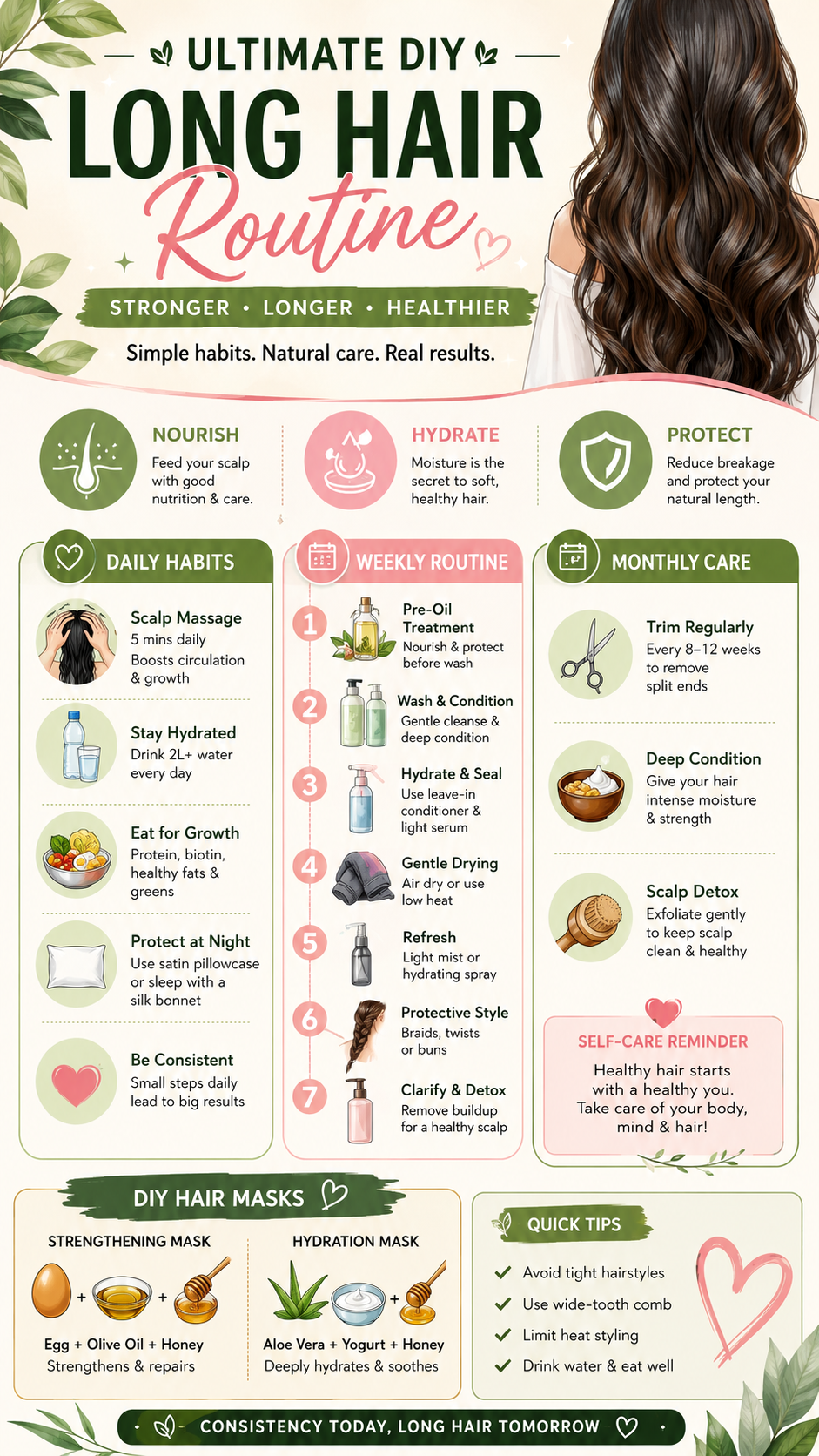
Growing long, healthy hair is not just about genetics. A consistent routine that supports scalp health, reduces breakage, and protects hair from daily damage can make a noticeable difference over time. Many people focus only on products, but true hair growth success comes from a combination of healthy habits, proper hydration, gentle styling, regular maintenance, and nourishing treatments. When these elements work together, hair has a better chance to retain length, stay strong, and maintain a healthy appearance.
Whether your goal is to achieve waist-length hair, improve thickness, reduce split ends, or simply create a healthier hair care routine, building a structured plan can help you stay consistent. This guide explores practical daily habits, weekly maintenance steps, monthly treatments, and DIY hair care techniques designed to support stronger, healthier, and longer hair.
Key Takeaways
- Healthy hair growth starts with a healthy scalp.
- Hydration and nutrition play a major role in hair strength.
- Protective styling helps reduce breakage and split ends.
- Regular trims support healthier-looking lengths.
- Weekly deep conditioning improves moisture retention.
- Consistency matters more than using dozens of products.
Understanding the Foundations of Hair Growth
Hair growth begins beneath the scalp. Each strand grows from a follicle that cycles through growth, transition, and resting phases. While you cannot completely control your natural growth rate, you can create conditions that help your hair remain healthy throughout the process.
One of the biggest challenges people face is not slow growth but length retention. Hair may grow from the scalp at a normal rate, but constant breakage prevents visible progress. This is why protective habits, moisture balance, and gentle handling are so important.
Important: Many people believe their hair is not growing when the real issue is breakage. Focusing on preserving existing length often creates more noticeable results than constantly searching for growth-boosting products.
Daily Habits That Support Longer Hair
The small choices you make every day can significantly affect your hair’s condition. Establishing healthy habits creates a strong foundation for long-term growth.
Scalp Massage for Better Circulation
A gentle scalp massage is one of the easiest additions to a hair care routine. Massaging the scalp may help increase blood flow to the follicles while also encouraging relaxation.
You can use your fingertips for five minutes daily or incorporate a lightweight oil into the process. Popular choices include rosemary-infused oil, argan oil, and amla oil.
- Use gentle circular motions.
- Avoid scratching the scalp.
- Massage consistently rather than aggressively.
- Focus on relaxation and stimulation.
Stay Hydrated
Hydration influences overall body function, including the health of your skin and scalp. Drinking enough water helps support moisture balance throughout the body.
While water alone will not suddenly accelerate growth, dehydration can contribute to dryness and brittleness. Aim to stay consistently hydrated throughout the day.
Prioritize a Nutrient-Rich Diet
Hair is primarily made of protein, which makes nutrition an important part of any growth-focused routine. A balanced diet can support healthier hair from the inside out.
Foods commonly associated with hair health include:
- Eggs and lean proteins
- Leafy green vegetables
- Nuts and seeds
- Salmon and fatty fish
- Legumes and beans
- Colorful fruits and vegetables
Many people also focus on nutrients such as biotin, iron, zinc, and omega-3 fatty acids as part of a healthy lifestyle.
Protect Hair During Sleep
Nighttime friction can lead to unnecessary breakage. Cotton pillowcases may create more friction compared to smoother alternatives.
Switching to a silk or satin pillowcase can help reduce tangles and friction while preserving hairstyles overnight.
Additional nighttime protection strategies include:
- Loose braids
- Soft protective buns
- Satin bonnets
- Gentle hair wraps
Choose Loose Hairstyles
Constant tension from tight ponytails, buns, and braids can place stress on the hairline and strands.
Opting for looser hairstyles reduces mechanical stress and may help prevent unnecessary breakage.
Why This Matters
- Most hair damage accumulates gradually through daily habits.
- Small improvements repeated consistently often produce better results than expensive treatments.
- Healthy hair care focuses on prevention as much as repair.
Building an Effective Weekly Hair Routine
A structured weekly routine helps maintain moisture, cleanliness, and protection while preventing product buildup.
Day 1: Pre-Shampoo Oil Treatment
Pre-shampoo treatments are designed to prepare hair before cleansing. Applying oil to the mid-lengths and ends may help minimize dryness during washing.
Popular oils include:
- Coconut oil
- Argan oil
- Castor oil
- Olive oil
Allow the oil to sit for at least 30 minutes before washing. Some people prefer overnight treatments for additional conditioning.
Day 2: Gentle Cleansing and Conditioning
Cleansing removes dirt, sweat, and product buildup from the scalp. Choosing a gentle shampoo can help clean the scalp without stripping away excessive moisture.
After shampooing, follow with a conditioner that focuses on hydration and manageability.
- Concentrate shampoo on the scalp.
- Apply conditioner primarily to lengths and ends.
- Use cool or lukewarm water when possible.
Day 3: Moisture and Protection
After washing, maintaining moisture becomes a priority. Leave-in conditioners can help improve softness and manageability.
Many people also use lightweight serums or oils to seal moisture into the hair shaft.
Pro Tip: Applying leave-in products to damp hair often helps distribute moisture more evenly and can reduce frizz throughout the week.
Day 4: Gentle Drying Methods
Wet hair is particularly vulnerable to damage. Rough towel drying can increase friction and lead to breakage.
Instead, consider:
- Using a microfiber towel
- Air drying whenever practical
- Keeping heat settings low if using tools
- Applying heat protectant before styling
Day 5: Refresh and Rehydrate
Hair often needs a moisture boost between wash days. Light mists, leave-in sprays, or water-based refreshers can help revive hair without making it heavy.
This step is particularly useful for curly, textured, or dry hair types.
Day 6: Protective Styling
Protective styles reduce daily manipulation and shield strands from environmental stressors.
Examples include:
- Loose braids
- Twists
- Low buns
- Protective updos
The goal is protection, not tension. Hairstyles should feel comfortable and secure without pulling on the scalp.
Day 7: Clarifying and Resetting
Product buildup can weigh down hair and affect scalp cleanliness. A clarifying shampoo used occasionally can help reset the scalp and hair.
Most people only need clarifying treatments periodically rather than weekly. The frequency depends on styling products, oils, and individual scalp needs.
Monthly Hair Maintenance for Long-Term Results
Regular Trims
Trimming damaged ends helps maintain healthier-looking hair. While trims do not directly speed up growth, they can reduce the spread of split ends.
Scheduling trims every few months helps preserve hair quality and improve overall appearance.
Scalp Detox Treatments
Periodic scalp exfoliation may help remove excess buildup and create a cleaner environment for hair care products.
Gentle scalp scrubs often combine fine exfoliating ingredients with moisturizing elements.
Always avoid harsh scrubbing, which may irritate sensitive skin.
Deep Moisture Sessions
Deep conditioning treatments provide concentrated hydration and can improve softness and elasticity.
Many people use heat caps, warm towels, or steam treatments to help conditioning products penetrate more effectively.
Important: Consistent deep conditioning can help maintain flexibility in the hair strand, which may reduce the risk of breakage during styling and detangling.
Simple DIY Hair Masks for Strength and Hydration
Homemade hair treatments remain popular because they use familiar ingredients and can be customized to individual preferences.
Protein-Inspired Strengthening Mask
This treatment focuses on ingredients commonly used to support hair strength.
- 1 egg
- 1 tablespoon olive oil
- 1 tablespoon honey
Mix thoroughly and apply to damp hair. Leave on for approximately 30 minutes before rinsing and shampooing.
The combination offers conditioning benefits while helping hair feel smoother and more manageable.
Hydrating Aloe Vera Mask
For moisture-focused care, many people enjoy a simple blend of:
- Aloe vera gel
- Plain yogurt
- Honey
Apply evenly and leave on for around 20 minutes before rinsing thoroughly.
This type of mask is often chosen for its soothing and moisturizing properties.
Common Hair Growth Mistakes to Avoid
Even a strong routine can be undermined by a few damaging habits.
- Overusing heat styling tools
- Skipping conditioner
- Using tight hairstyles daily
- Brushing aggressively
- Ignoring split ends
- Frequently changing products without consistency
- Neglecting scalp care
Progress often comes from eliminating damage rather than constantly adding new treatments.
Creating a Sustainable Long Hair Journey
Hair growth goals require patience. Consistency over months matters far more than dramatic short-term changes.
Rather than chasing overnight results, focus on building habits that support overall hair health. Small improvements in hydration, nutrition, protection, and maintenance can accumulate into meaningful progress.
Documenting your routine with photos every month can also help you notice improvements that may otherwise go unnoticed.
At a Glance
- Massage the scalp regularly.
- Stay hydrated and eat nutrient-rich foods.
- Use gentle cleansing and conditioning practices.
- Protect hair while sleeping and styling.
- Prioritize moisture and reduce breakage.
Conclusion
Achieving longer, healthier hair is a gradual process built on consistency and care. Daily habits such as scalp massage, hydration, protective styling, and proper nutrition create a strong foundation. Weekly maintenance keeps hair balanced and manageable, while monthly treatments help address buildup, dryness, and damaged ends.
By focusing on scalp health, moisture retention, breakage prevention, and gentle handling, you can support your hair’s natural growth journey and improve overall hair quality. The most effective routine is not necessarily the most complicated one. It is the routine you can follow consistently while giving your hair the care and protection it needs to thrive.
Tags
Hair Growth DIY Hair Care Healthy Hair Scalp Care Hair Routine Protective Hairstyles Deep Conditioning Natural Hair Care