
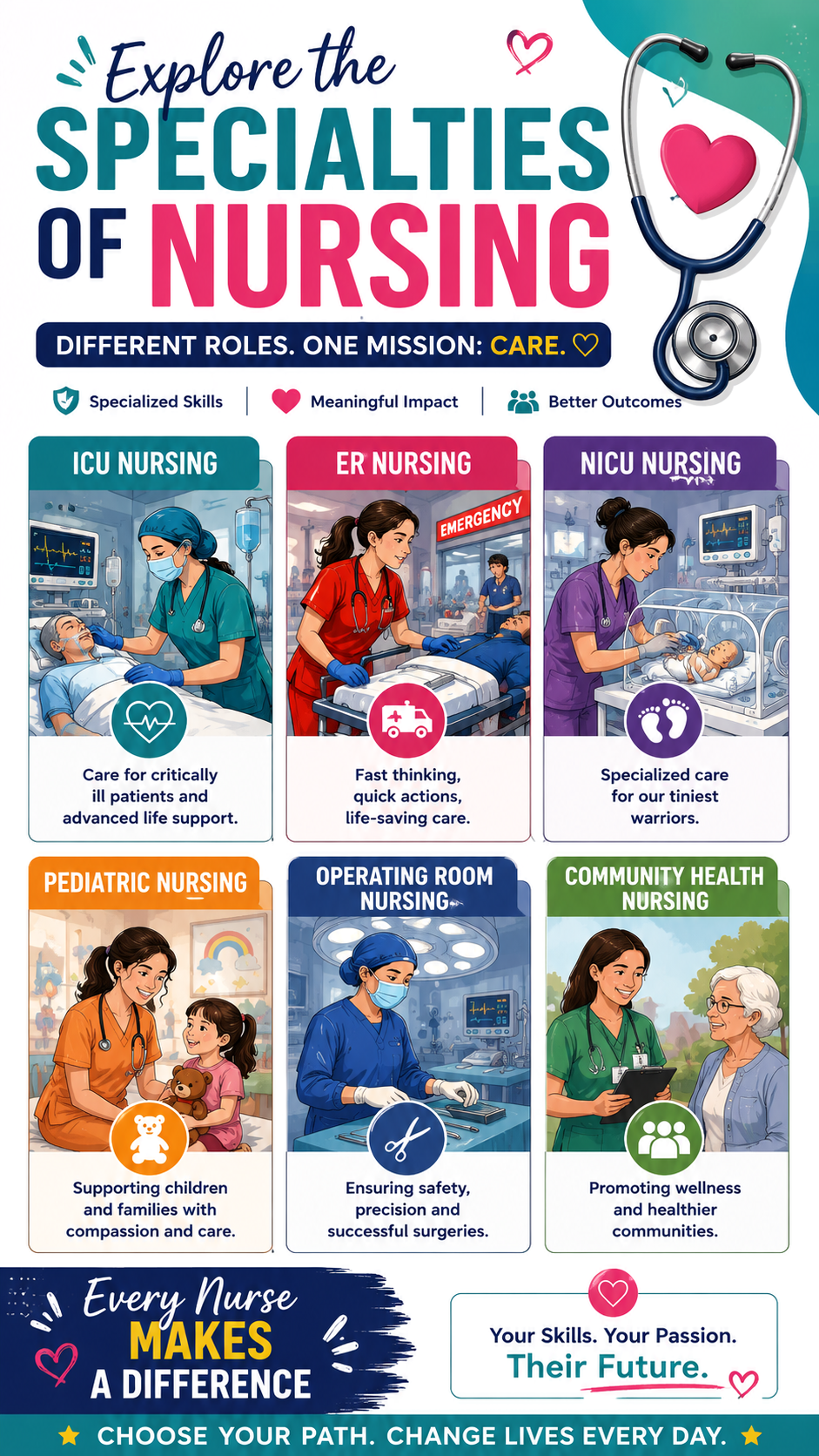
Nursing is one of the most diverse and impactful professions in healthcare. From critical care units and emergency departments to neonatal intensive care and community outreach programs, nurses serve patients at every stage of life. Each specialty offers unique challenges, rewards, and opportunities to make a meaningful difference. Understanding the various nursing specialties can help aspiring nurses choose a career path that aligns with their strengths, interests, and long-term goals.
Whether you are a nursing student exploring future options, a healthcare professional considering a specialty change, or simply interested in the nursing profession, learning about these distinct roles provides valuable insight into the many ways nurses contribute to patient care and community well-being.
Key Takeaways
- Nursing offers multiple specialties with unique responsibilities and patient populations.
- ICU, ER, NICU, Pediatric, Operating Room, and Community Health nursing each require specialized skills.
- Different specialties provide different career growth opportunities and work environments.
- Strong communication, critical thinking, and compassion are essential across all nursing roles.
- Choosing the right specialty depends on personal interests, strengths, and professional goals.
Why Nursing Specialties Matter
Modern healthcare is highly specialized. Patients have unique medical needs that often require focused expertise. Nursing specialties ensure that patients receive care from professionals who understand specific conditions, treatments, and healthcare environments.
Nurses are not only caregivers but also educators, advocates, coordinators, and leaders. Their specialized knowledge helps improve patient outcomes, enhance safety, and support families through challenging situations.
Important: Specialized nursing allows healthcare systems to deliver targeted care while giving nurses opportunities to develop advanced expertise in areas they are passionate about.
ICU Nursing: Caring for Critically Ill Patients
Intensive Care Unit (ICU) nurses work with patients experiencing life-threatening illnesses or injuries. These healthcare professionals monitor complex medical equipment, administer critical medications, and respond quickly to changes in patient conditions.
Key Responsibilities of ICU Nurses
- Monitoring vital signs continuously
- Managing ventilators and advanced medical devices
- Administering specialized medications
- Collaborating with physicians and specialists
- Providing support to patients and families
ICU nursing requires exceptional attention to detail, advanced clinical knowledge, and the ability to remain calm under pressure. Every decision can have a significant impact on patient outcomes.
Skills Needed for ICU Nursing
Critical thinking, strong assessment skills, technical competence, and emotional resilience are essential. ICU nurses frequently care for patients who require constant monitoring and rapid interventions.
ER Nursing: The Front Line of Emergency Care
Emergency Room (ER) nurses are often the first healthcare professionals to assess and treat patients during emergencies. Their work environment is fast-paced, unpredictable, and highly dynamic.
ER nurses encounter a wide variety of situations, from minor injuries to severe trauma, cardiac emergencies, and critical illnesses.
What Makes ER Nursing Unique?
- Rapid patient assessment and triage
- Immediate life-saving interventions
- Management of diverse medical conditions
- Coordination with emergency healthcare teams
- Adaptability in high-pressure situations
The ability to make quick decisions and prioritize care effectively is crucial. ER nurses often work under intense pressure while maintaining compassion and professionalism.
Why This Matters
- Emergency nurses often serve as the first line of defense during critical medical events.
- Their rapid actions can significantly improve survival rates and recovery outcomes.
- Strong triage skills help ensure patients receive timely care.
NICU Nursing: Caring for the Smallest Patients
Neonatal Intensive Care Unit (NICU) nurses specialize in caring for newborns who require intensive medical attention. These infants may be premature, critically ill, or born with complex health conditions.
NICU nurses combine technical expertise with extraordinary compassion. They work closely with neonatologists, respiratory therapists, and families to support infant health and development.
Responsibilities in the NICU
- Monitoring premature and critically ill newborns
- Administering specialized treatments
- Supporting infant feeding and growth
- Educating and reassuring parents
- Collaborating with multidisciplinary teams
The NICU environment requires patience, precision, and a deep understanding of neonatal physiology.
Pro Tip: Nurses who enjoy detailed patient monitoring, family-centered care, and working with infants often find NICU nursing particularly rewarding.
Pediatric Nursing: Supporting Children and Families
Pediatric nurses focus on the health and well-being of infants, children, and adolescents. Their role extends beyond clinical care to include education, emotional support, and developmental guidance.
Working with young patients requires creativity, patience, and excellent communication skills. Pediatric nurses must often adapt their approach based on a child’s age and developmental stage.
Core Areas of Pediatric Nursing
- Routine health assessments
- Management of acute and chronic illnesses
- Patient and family education
- Developmental support
- Preventive healthcare initiatives
Building trust with both children and parents is a major component of pediatric nursing. Successful pediatric nurses excel at making healthcare experiences less intimidating for young patients.
Operating Room Nursing: Precision and Patient Safety
Operating Room (OR) nurses play a critical role before, during, and after surgical procedures. They work closely with surgeons, anesthesiologists, and surgical technologists to ensure procedures are conducted safely and efficiently.
Patient safety is the top priority in the operating room. OR nurses help maintain sterile environments, prepare surgical equipment, and monitor patient needs throughout procedures.
Responsibilities of OR Nurses
- Preparing operating rooms for surgery
- Maintaining sterile techniques
- Assisting surgical teams
- Advocating for patient safety
- Monitoring patient care during procedures
The operating room requires exceptional focus, teamwork, and technical knowledge. Nurses in this specialty are vital members of every surgical team.
Community Health Nursing: Improving Public Wellness
Community Health Nurses work beyond hospital walls to promote wellness, prevent disease, and improve population health. Their efforts help strengthen communities through education, outreach, and preventive care.
These nurses often work in schools, public health agencies, clinics, community centers, and rural healthcare settings.
Focus Areas in Community Health Nursing
- Health education and awareness
- Disease prevention programs
- Community assessments
- Advocacy for underserved populations
- Health promotion initiatives
Community health nursing emphasizes long-term wellness and preventive care. The impact often extends to entire populations rather than individual patients.
Important: Community health nurses help reduce healthcare disparities by bringing education, resources, and preventive services directly to the populations that need them most.
Comparing Nursing Specialties
Each nursing specialty offers a unique blend of responsibilities, work environments, and patient interactions. Understanding these differences can help nurses make informed career decisions.
| Specialty | Primary Focus | Work Environment |
|---|---|---|
| ICU Nursing | Critical care | Intensive care units |
| ER Nursing | Emergency treatment | Emergency departments |
| NICU Nursing | Newborn intensive care | NICUs |
| Pediatric Nursing | Child health | Hospitals and clinics |
| OR Nursing | Surgical care | Operating rooms |
| Community Health Nursing | Public wellness | Community settings |
How to Choose the Right Nursing Specialty
Selecting a nursing specialty involves more than simply choosing a work environment. Personal interests, strengths, lifestyle preferences, and career goals should all play a role in the decision-making process.
Questions to Consider
- Do you enjoy fast-paced environments?
- Would you prefer long-term patient relationships?
- Are you passionate about working with children or newborns?
- Do you thrive under pressure?
- Are you interested in preventive healthcare and education?
Many nurses explore different specialties throughout their careers. The flexibility of nursing allows professionals to continue learning and evolving as healthcare needs change.
The Skills Shared Across All Nursing Specialties
Although specialties differ significantly, several core competencies remain essential regardless of the practice area.
- Critical thinking and clinical judgment
- Communication and interpersonal skills
- Compassion and empathy
- Attention to detail
- Professionalism and ethics
- Adaptability and resilience
These foundational skills enable nurses to provide high-quality care while navigating the complexities of modern healthcare systems.
At a Glance
- ICU nurses specialize in critical care and advanced monitoring.
- ER nurses thrive in fast-moving emergency situations.
- NICU nurses care for vulnerable newborns and support families.
- Pediatric nurses focus on children’s health and development.
- OR nurses ensure surgical safety and efficiency.
- Community health nurses promote wellness beyond hospitals.
Conclusion
Nursing specialties showcase the incredible diversity within the profession. Whether providing life-saving care in intensive care units, responding to emergencies, supporting fragile newborns, guiding children through recovery, assisting in surgery, or improving public health, nurses play essential roles in every corner of healthcare.
Each specialty offers unique opportunities to make a meaningful impact while developing specialized expertise. By understanding the responsibilities, environments, and rewards associated with different nursing paths, aspiring and practicing nurses can make informed decisions about their professional journeys. No matter the specialty, nurses remain united by a common mission: improving lives through compassionate, skilled, and dedicated care.
Tags
Nursing Specialties ICU Nurse ER Nurse NICU Nurse Pediatric Nursing Operating Room Nurse Community Health Nursing Nurses Week 2026