
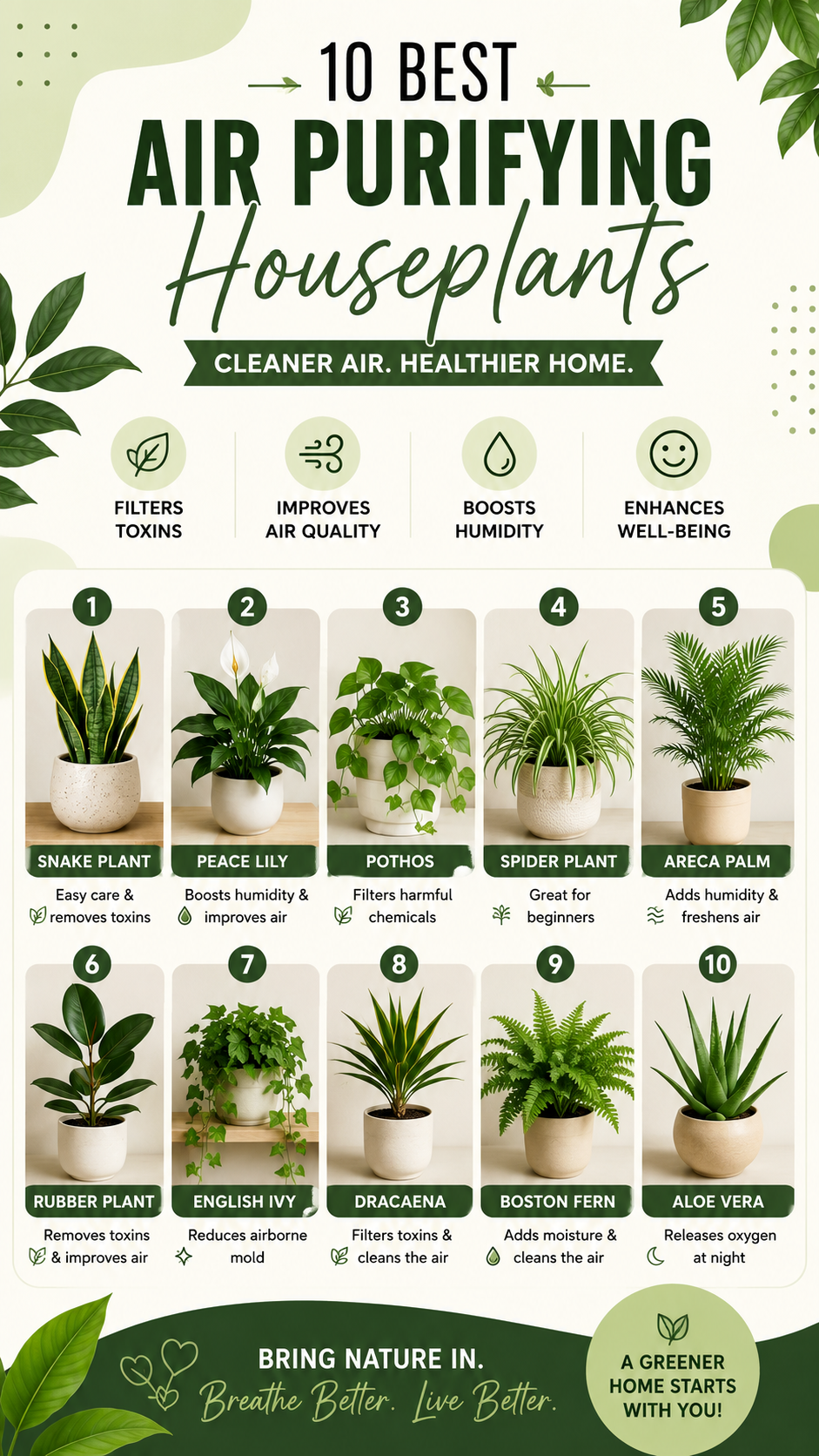
Indoor plants do far more than enhance the look of a room. They bring a sense of calm, add natural beauty, and can help create a fresher living environment. As more people embrace wellness-focused interiors, air-purifying houseplants have become a popular choice for homes, apartments, and offices. These green companions offer an easy way to introduce nature indoors while contributing to a more inviting and comfortable atmosphere.
From low-maintenance favorites to lush statement plants, there are many options that fit different lifestyles and spaces. Whether you are a beginner plant owner or a seasoned indoor gardener, choosing the right plants can transform the atmosphere of your home while creating a relaxing connection to nature.
Key Takeaways
- Many indoor plants help improve the overall indoor environment.
- Low-maintenance varieties are ideal for beginners.
- Plants can boost visual appeal and support a calming atmosphere.
- Different species thrive under different lighting and watering conditions.
- Grouping plants together can create a lush indoor oasis.
- Choosing the right plant improves both aesthetics and functionality.
Why Air-Purifying Plants Are So Popular
Modern homes are often designed to be energy efficient, which can limit airflow from the outdoors. This has led many homeowners to seek simple ways to make their indoor spaces feel fresher and more vibrant. Houseplants provide a practical and visually appealing solution.
Beyond their decorative value, indoor plants bring softness and texture to a room. Their leaves introduce natural patterns that contrast beautifully with furniture, walls, and flooring. The result is a balanced environment that feels welcoming and alive.
Important: The most successful indoor plant collections combine visual variety with practical care requirements. Selecting plants that match your available light and schedule is often more important than choosing rare or trendy varieties.
The Best Air-Purifying Plants for Indoor Spaces
1. Snake Plant
The Snake Plant is one of the most beginner-friendly houseplants available. Its upright leaves create a modern architectural look that fits nearly any interior style. It tolerates low light conditions and requires minimal watering, making it ideal for busy households.
- Thrives in indirect light
- Requires infrequent watering
- Perfect for bedrooms and offices
- Low-maintenance and resilient
2. Peace Lily
Known for its elegant white blooms and glossy foliage, the Peace Lily adds sophistication to indoor spaces. It performs well in lower light environments and is often chosen for living rooms, hallways, and workspaces.
Its lush appearance makes it an excellent decorative centerpiece while maintaining a relatively simple care routine.
3. Pothos
Pothos is loved for its trailing vines and vibrant leaves. It grows well in hanging baskets, on shelves, or cascading from cabinets. This versatile plant adapts to a variety of indoor conditions and grows quickly when given proper care.
- Fast-growing
- Easy to propagate
- Excellent for shelves and hanging displays
- Adaptable to multiple lighting conditions
4. Spider Plant
The Spider Plant is a classic favorite that remains popular due to its adaptability and attractive striped foliage. It produces small plantlets that can be propagated easily, making it an enjoyable choice for plant enthusiasts.
5. Areca Palm
If you want to create a tropical feel indoors, the Areca Palm is an excellent option. Its feathery fronds bring movement and softness to large rooms while acting as a natural focal point.
The plant works particularly well in bright living rooms, sunrooms, and open-concept spaces.
Expert Insight
When decorating with houseplants, think in layers. Combine tall floor plants, medium-sized tabletop plants, and trailing varieties to create depth, visual balance, and a professionally styled look.
6. Rubber Plant
The Rubber Plant offers bold, glossy leaves that make a dramatic statement. Its upright growth habit makes it suitable for corners that need extra visual interest.
With proper lighting and occasional pruning, this plant can become an impressive feature within the home.
7. English Ivy
English Ivy brings a timeless charm to interior spaces. Its trailing vines can soften shelves, hanging planters, and decorative stands. The cascading growth pattern adds movement and elegance to indoor plant displays.
8. Dracaena
Dracaena varieties are known for their striking foliage and adaptability. Available in multiple leaf patterns and colors, they fit seamlessly into both contemporary and traditional interiors.
Their structured growth makes them ideal for adding height without overwhelming a room.
9. Boston Fern
Boston Ferns are prized for their lush, delicate fronds. They create a soft, natural look that complements cozy living spaces and bright bathrooms.
These plants appreciate consistent moisture and thrive in environments with higher humidity.
10. Aloe Vera
Aloe Vera combines practicality with beauty. Its sculptural appearance suits minimalist and modern interiors while remaining easy to maintain.
The plant thrives in bright locations and requires relatively little attention compared to many other indoor species.
How to Choose the Right Plant for Your Home
Selecting the perfect houseplant starts with understanding your environment. Not every plant thrives under the same conditions, so evaluating your available light, humidity levels, and maintenance preferences is essential.
Assess Your Lighting
Observe how much natural light each room receives throughout the day. South-facing windows typically provide bright light, while north-facing rooms often offer softer conditions.
- Bright spaces suit palms, aloe, and rubber plants.
- Moderate light supports pothos and spider plants.
- Low-light areas work well for snake plants and peace lilies.
Consider Maintenance Requirements
If you travel frequently or have a busy schedule, low-maintenance plants are usually the best choice. Snake Plants, Pothos, and Rubber Plants are excellent options for people seeking minimal upkeep.
Pro Tip: It is easier to recover a plant from underwatering than overwatering. Always check soil moisture before adding water, especially for drought-tolerant varieties.
Decorating with Indoor Plants
Indoor plants are among the most versatile decor elements available. They can be used to fill empty corners, soften architectural lines, and create focal points throughout the home.
Create Plant Groupings
Grouping several plants together creates visual impact and can help establish a lush indoor garden feel. Combining different heights, leaf shapes, and textures adds interest while maintaining harmony.
Use Decorative Containers
The right planter can elevate the appearance of any houseplant. Neutral ceramic pots complement modern spaces, while woven baskets introduce warmth and texture.
Think Vertically
Plant stands, shelves, and hanging planters allow you to maximize greenery without sacrificing floor space. Vertical arrangements are particularly useful in apartments and smaller homes.
Common Indoor Plant Care Mistakes
Even experienced plant owners occasionally encounter challenges. Understanding common mistakes can improve long-term success.
- Overwatering plants
- Using containers without drainage
- Ignoring light requirements
- Allowing dust to accumulate on leaves
- Neglecting seasonal growth changes
Regular observation is one of the most effective ways to maintain healthy plants. Changes in leaf color, growth rate, or soil moisture often provide early indicators of care adjustments that may be needed.
Important: Consistency is often more valuable than perfection. Establishing a simple routine for watering, cleaning leaves, and monitoring growth helps plants remain healthy throughout the year.
Benefits Beyond Air Quality
While many people focus on air-purifying qualities, indoor plants offer a variety of additional advantages. They introduce natural color, encourage mindfulness, and contribute to a more relaxing environment.
Many homeowners find that caring for plants becomes a rewarding hobby that promotes patience and daily connection with nature. Even a small collection can dramatically change how a room feels.
Plants also complement popular interior design styles, including Scandinavian, modern organic, minimalist, bohemian, and contemporary decor. Their versatility makes them one of the easiest upgrades for any living space.
At a Glance
- Snake Plant is one of the easiest plants for beginners.
- Pothos offers fast growth and versatile styling options.
- Peace Lily adds elegance with attractive blooms.
- Areca Palm creates a tropical atmosphere indoors.
- Proper lighting is the key to long-term success.
Conclusion
Air-purifying houseplants combine beauty, functionality, and natural charm in a way few decor elements can match. Whether you prefer the dramatic leaves of a Rubber Plant, the graceful elegance of a Peace Lily, or the nearly effortless care of a Snake Plant, there is a perfect option for every home and lifestyle.
By selecting plants that suit your environment and maintaining a simple care routine, you can create a greener, more inviting indoor space. From enhancing visual appeal to supporting a healthier atmosphere, these indoor plants remain some of the most valuable additions to modern homes.
Tags
Air Purifying Plants Indoor Plants Houseplants Plant Care Indoor Gardening Home Decor Green Living Biophilic Design