
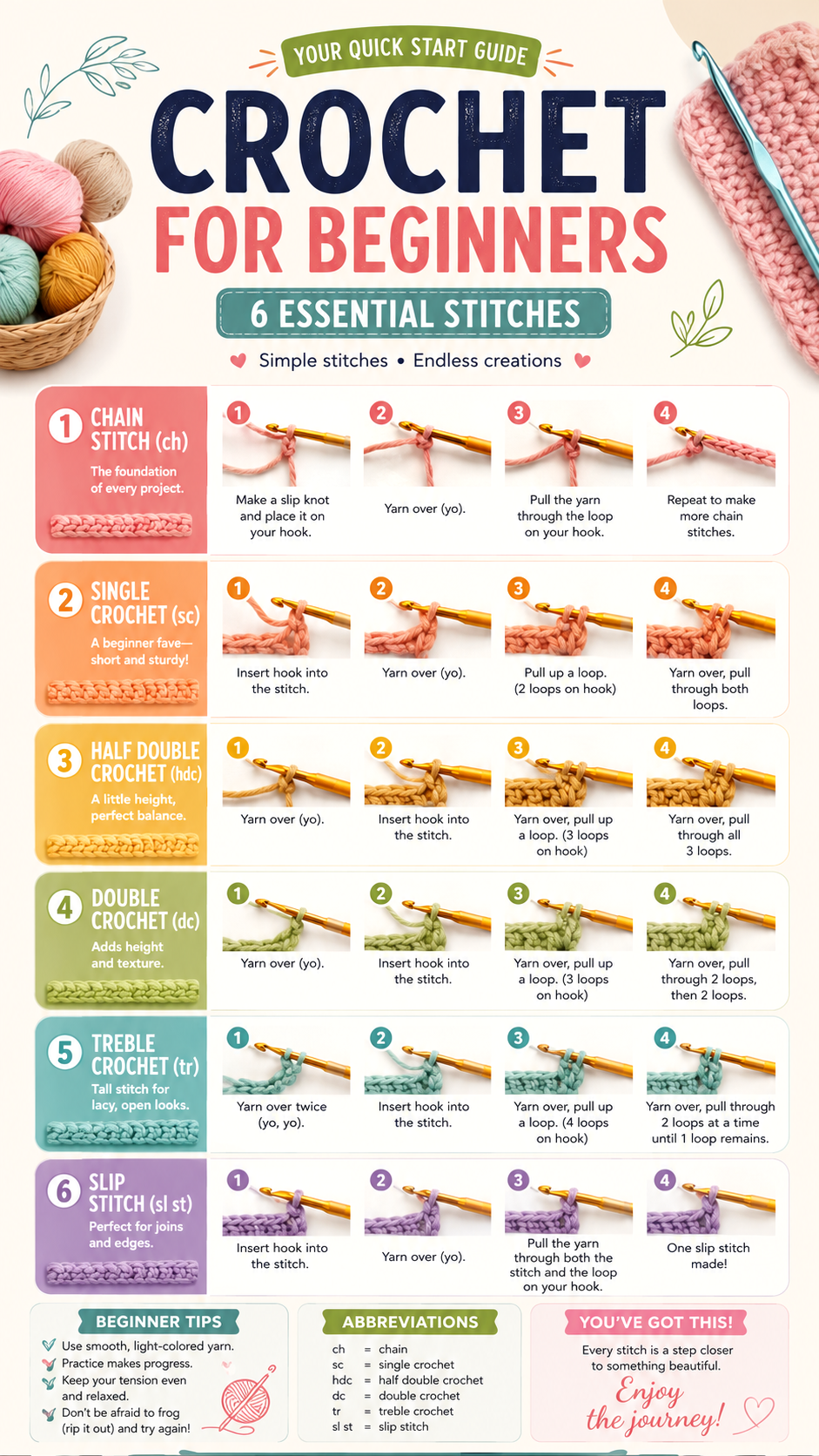
Crochet is one of those creative skills that looks complex at first glance but becomes deeply rewarding once you understand the basics. The visual guide shown here is designed for absolute beginners, breaking crochet down into clear, manageable steps. With soft yarn textures, clean layouts, and stitch-by-stitch visuals, it speaks directly to anyone who wants to learn crochet without feeling overwhelmed.
Whether you are picking up a hook for the first time or returning after a long break, mastering essential crochet stitches builds the foundation for everything you will create. Scarves, blankets, clothing, home decor, and gifts all begin with these same fundamental techniques.
Key Takeaways
- Learn the six core crochet stitches every beginner should know
- Understand how stitch height affects texture and fabric
- Follow simple, repeatable steps that build confidence fast
- Use visual guidance to avoid common beginner mistakes
- Create a strong foundation for future crochet projects
Why Learning Crochet Stitches Matters
Crochet is built entirely on stitches. Each stitch creates a specific height, density, and pattern that influences how the final piece looks and feels. The image focuses on essential stitches because once these are learned, almost any beginner pattern becomes accessible.
Important: Learning stitches properly at the start helps prevent uneven tension, curling edges, and frustration later. Taking time with the basics saves hours of fixing mistakes down the road.
The visual structure shown emphasizes clarity. Each stitch is separated into numbered steps, allowing beginners to slow down and focus on one movement at a time. This method removes guesswork and helps muscle memory develop naturally.
The Chain Stitch: The Foundation of Crochet
The chain stitch is the starting point for nearly every crochet project. It forms the base row onto which all other stitches are built. Visually, it resembles a row of interlocking loops that look neat and flexible.
How the Chain Stitch Works
- Create a slip knot and place it on your hook
- Yarn over by wrapping the yarn around the hook
- Pull the yarn through the loop on the hook
- Repeat to create the desired number of chains
Chain stitches should be relaxed, not tight. Keeping them loose makes it much easier to insert your hook later when working the next row.
Single Crochet: The Beginner Favorite
Single crochet is often the first stitch beginners truly master. It creates a tight, sturdy fabric and is commonly used in dishcloths, amigurumi, and warm accessories.
Pro Tip: If your edges look uneven, count your stitches at the end of every row. Missing or adding stitches is the most common beginner issue with single crochet.
Basic Single Crochet Steps
- Insert the hook into the stitch
- Yarn over and pull up a loop
- Yarn over again and pull through both loops
The compact look of single crochet makes it ideal for structured projects and clean edges.
Half Double Crochet: Balanced and Versatile
Half double crochet sits comfortably between single and double crochet. It offers more height without becoming too open or loose.
This stitch is popular for blankets and garments because it works up faster than single crochet while maintaining warmth and texture.
Why Beginners Love Half Double Crochet
- Creates soft, flexible fabric
- Builds height without large gaps
- Easy rhythm once learned
Double Crochet: Height and Speed
Double crochet is one of the most widely used stitches in crochet patterns. Its taller structure allows projects to grow quickly, making it satisfying for beginners who want visible progress.
Important: Taller stitches like double crochet require consistent yarn tension. Too loose and the fabric looks uneven, too tight and the hook becomes difficult to insert.
Key Characteristics of Double Crochet
- Airy and lightweight texture
- Excellent for blankets and shawls
- Easy to identify and count
Treble Crochet: Light and Lacy Designs
Treble crochet is taller than double crochet and introduces more openness into your fabric. It is commonly used in decorative patterns and lacy designs.
Although it looks advanced, the treble stitch follows the same logic as other stitches. Once you understand the pattern of yarn overs and pull-throughs, it becomes surprisingly approachable.
Slip Stitch: Joining and Finishing
The slip stitch may be small, but it plays a crucial role in crochet. It is used to join rounds, move the yarn without adding height, and finish edges cleanly.
Common Uses for Slip Stitch
- Joining rounds seamlessly
- Creating neat edges
- Closing off projects
Expert Insight
Learning crochet visually accelerates progress. Clear step-by-step visuals help beginners understand hand positioning, loop size, and stitch anatomy far better than text alone.
Tips for Crochet Beginners
Starting crochet should feel enjoyable, not stressful. Small adjustments can make a huge difference in your learning experience.
- Use light-colored yarn to see stitches clearly
- Choose smooth yarn that does not split easily
- Practice tension by crocheting slowly
- Do not hesitate to unravel and redo rows
Understanding Crochet Abbreviations
Patterns often use abbreviations to save space. Becoming familiar with basic terms like ch, sc, hdc, dc, tr, and sl st will make reading patterns much easier.
Keeping a small reference guide nearby while practicing can reduce confusion and speed up learning.
At a Glance
- Chain stitch starts most projects
- Single crochet builds dense fabric
- Half double balances speed and texture
- Double crochet adds height quickly
- Slip stitch finishes and joins cleanly
Final Thoughts on Learning Crochet Basics
Learning crochet is a journey made up of small, satisfying wins. Each stitch mastered builds confidence and opens the door to new projects. With a clear visual guide and consistent practice, beginners can progress faster than they expect.
Crochet rewards patience, creativity, and curiosity. By focusing on these essential stitches, you are laying the groundwork for years of handmade projects that reflect your personal style.
Tags
Crochet Basics Crochet for Beginners Crochet Stitches Learn Crochet Yarn Crafts Handmade Projects