
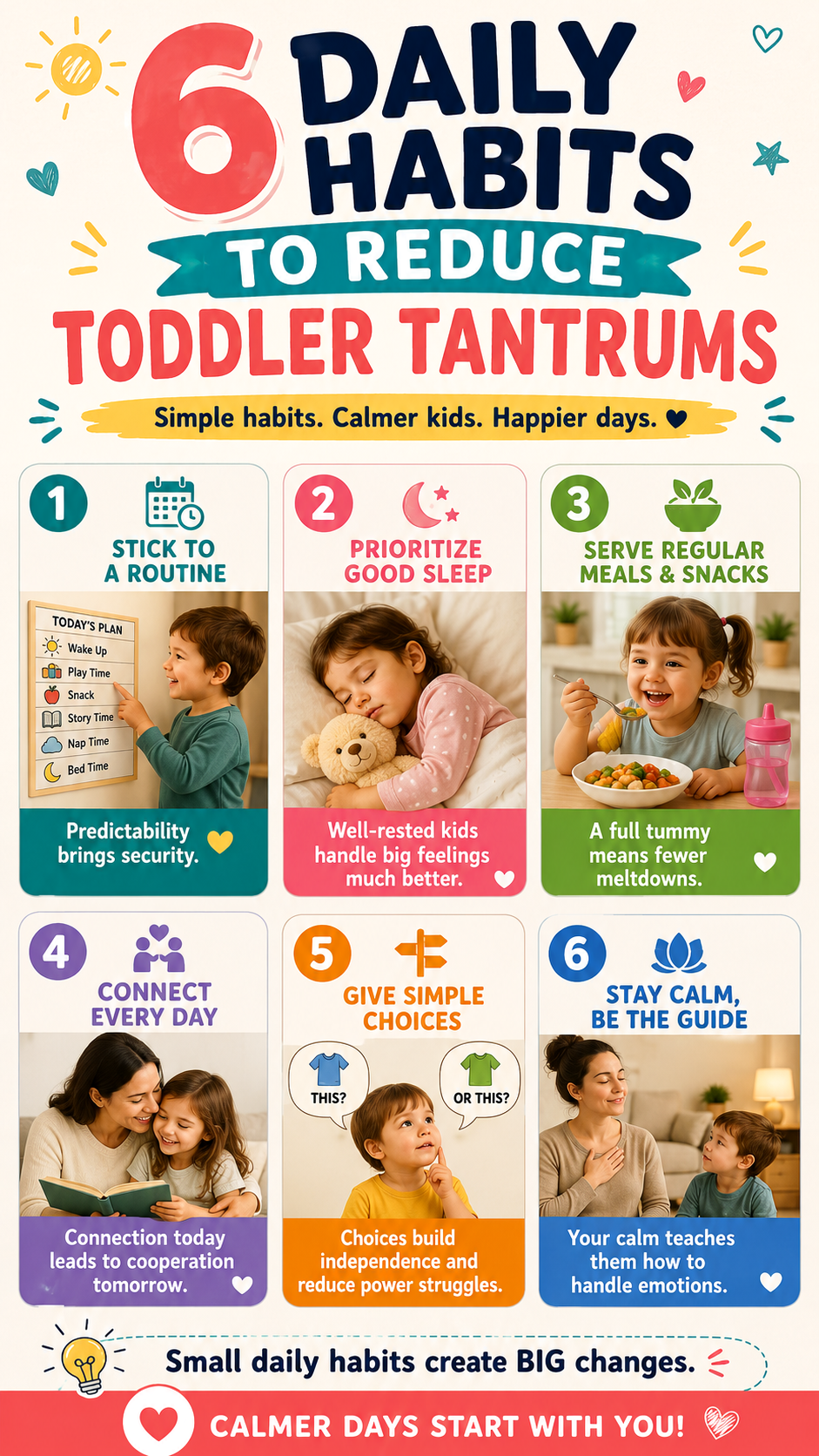
Toddler tantrums are a normal part of early childhood, but that does not make them any easier to handle. One minute your child is happily playing, and the next they are overwhelmed by frustration, disappointment, hunger, fatigue, or simply a desire for independence. While occasional meltdowns are expected, certain daily habits can significantly reduce the frequency and intensity of tantrums.
Young children thrive on predictability, connection, and support. By focusing on a few simple routines each day, parents can create an environment where toddlers feel secure, understood, and better equipped to manage their emotions. The good news is that these habits are practical, easy to implement, and beneficial for the entire family.
Key Takeaways
- Consistent routines help toddlers feel safe and reduce uncertainty.
- Adequate sleep improves emotional regulation and resilience.
- Regular meals and snacks prevent hunger-related meltdowns.
- Daily connection strengthens trust and reduces attention-seeking behaviors.
- Offering simple choices encourages independence and cooperation.
- Parents who remain calm model healthy emotional responses.
Why Toddler Tantrums Happen
Before exploring effective habits, it helps to understand why tantrums occur. Toddlers experience powerful emotions but lack the language, self-control, and emotional skills needed to express them appropriately. They may feel frustrated when they cannot communicate their needs, disappointed when things do not go their way, or overwhelmed by changes in their environment.
At this stage of development, the emotional centers of the brain are highly active, while self-regulation skills are still emerging. This means even small challenges can feel enormous to a young child.
Important: Tantrums are not always signs of bad behavior. In many cases, they are a child’s attempt to cope with emotions they do not yet know how to manage effectively.
1. Keep a Consistent Daily Routine
One of the most effective ways to reduce toddler tantrums is to establish a predictable routine. Children feel safer when they know what comes next. Predictability reduces anxiety and creates a sense of security.
A consistent routine does not require a strict schedule down to the minute. Instead, focus on maintaining a reliable sequence of daily activities such as waking up, meals, playtime, naps, bath time, and bedtime.
Benefits of Daily Routines
- Reduces uncertainty and stress.
- Helps toddlers transition between activities.
- Encourages cooperation.
- Creates a sense of safety and stability.
- Supports healthy emotional development.
You can make routines even more effective by using visual schedules, simple reminders, or songs that signal upcoming transitions.
2. Prioritize Quality Sleep Every Day
Sleep plays a crucial role in emotional regulation. An overtired toddler is more likely to become frustrated, impulsive, and emotionally reactive.
When children do not get enough rest, even minor disappointments can trigger major emotional responses. A well-rested child is generally better equipped to handle challenges, transitions, and social interactions.
Signs Your Toddler May Be Overtired
- Increased irritability.
- Difficulty following directions.
- Frequent crying or whining.
- More frequent tantrums.
- Hyperactive behavior before bedtime.
Establishing a calming bedtime routine can make a significant difference. Reading books, dimming lights, and avoiding stimulating activities before sleep help signal that it is time to wind down.
Why This Matters
- Sleep affects mood, attention, and emotional control.
- Consistent bedtimes create predictable expectations.
- Well-rested toddlers typically handle frustration more effectively.
3. Offer Regular Meals and Healthy Snacks
Many toddler meltdowns can be traced back to one simple issue: hunger. Young children often have limited awareness of their physical needs and may not communicate hunger before becoming upset.
Keeping meal and snack times consistent helps maintain stable energy levels and reduces emotional volatility throughout the day.
Tips for Managing Hunger-Related Tantrums
- Serve meals on a predictable schedule.
- Keep healthy snacks available.
- Avoid long gaps between eating opportunities.
- Offer balanced foods that provide lasting energy.
- Carry snacks when leaving home.
Simple planning can prevent many difficult moments, especially during outings, errands, or busy afternoons.
Pro Tip: If tantrums seem to occur around the same time each day, consider whether hunger, fatigue, or overstimulation may be contributing factors rather than focusing solely on behavior.
4. Connect With Your Child Every Day
Children crave attention and connection from their caregivers. When those emotional needs are consistently met, toddlers often feel more secure and cooperative.
Connection does not require elaborate activities. A few minutes of focused, uninterrupted attention can have a powerful impact.
Simple Ways to Connect Daily
- Read together.
- Play on the floor with your child.
- Share meals without distractions.
- Talk about their day.
- Offer hugs and physical affection.
- Listen attentively when they communicate.
Even ten to fifteen minutes of intentional one-on-one interaction can strengthen your relationship and reduce attention-seeking behaviors.
5. Give Simple Choices Throughout the Day
Toddlers naturally seek independence. They want to feel capable and in control of their environment. Unfortunately, when they lack opportunities to make decisions, power struggles often emerge.
Offering simple choices allows children to exercise autonomy within healthy boundaries.
Examples of Effective Choices
- Would you like the red shirt or the blue shirt?
- Do you want apple slices or banana pieces?
- Should we read this book or that book?
- Would you like to brush your teeth first or put on pajamas first?
Notice that both options are acceptable to the parent. This approach empowers the child while maintaining structure.
Too many choices can be overwhelming, so keep options limited to two whenever possible.
6. Stay Calm During Difficult Moments
Children learn emotional regulation by watching the adults around them. When parents remain calm during challenging situations, toddlers gain a powerful example of how to respond to stress.
Staying calm does not mean ignoring difficult feelings. Instead, it involves responding thoughtfully rather than reacting impulsively.
How Calm Responses Help
- Reduce emotional escalation.
- Create a sense of safety.
- Teach self-regulation skills.
- Build trust between parent and child.
- Encourage problem-solving.
Important: Children often borrow emotional cues from caregivers. A calm voice, relaxed posture, and patient response can help de-escalate situations more effectively than lectures or punishment.
Creating an Environment That Supports Emotional Regulation
Beyond daily habits, the overall environment also influences behavior. Toddlers are sensitive to noise, overstimulation, abrupt changes, and emotional tension.
Creating a supportive environment may include:
- Maintaining predictable routines.
- Providing quiet spaces for calming down.
- Limiting unnecessary overstimulation.
- Preparing children for transitions.
- Using age-appropriate expectations.
When children feel physically and emotionally secure, they are better positioned to manage everyday frustrations.
What to Do During a Tantrum
Even with excellent routines and preventive habits, tantrums will still happen from time to time. Knowing how to respond can make a significant difference.
Helpful Responses
- Stay calm and regulate your own emotions.
- Acknowledge your child’s feelings.
- Keep language simple and reassuring.
- Ensure safety if your child becomes physical.
- Wait until they are calm before discussing behavior.
- Offer comfort when they are ready.
Responses to Avoid
- Yelling back.
- Lengthy lectures.
- Shaming language.
- Threats made in frustration.
- Expecting immediate reasoning during intense emotions.
Remember that toddlers are still developing the skills needed to manage strong feelings. Patience and consistency often produce better long-term outcomes than harsh reactions.
Building Long-Term Emotional Skills
Reducing tantrums is not only about preventing difficult moments. It is also about teaching children the emotional skills they will use throughout life.
Parents can support emotional growth by helping children identify feelings, practice coping strategies, and understand that emotions are normal.
Skills Worth Teaching Early
- Naming emotions.
- Taking deep breaths.
- Asking for help.
- Using words instead of hitting.
- Practicing patience.
- Recognizing personal needs.
These skills develop gradually, but consistent guidance helps children become more resilient and emotionally aware over time.
At a Glance
- Maintain predictable daily routines.
- Protect sleep schedules whenever possible.
- Prevent hunger with regular meals and snacks.
- Invest in meaningful daily connection.
- Offer simple choices to support independence.
- Model calm behavior during challenging moments.
Conclusion
Toddler tantrums are a natural part of development, but they do not have to dominate daily life. Simple habits such as maintaining routines, prioritizing sleep, providing regular meals, building strong connections, offering choices, and staying calm can dramatically improve a child’s ability to manage emotions.
These strategies are not quick fixes. Instead, they create a strong foundation for emotional growth, confidence, and resilience. By focusing on consistency and connection, parents can help their toddlers navigate big feelings while creating calmer, more enjoyable days for the entire family.
Tags
Toddler Tantrums Positive Parenting Toddler Behavior Child Development Gentle Parenting Emotional Regulation Parenting Tips Raising Toddlers