
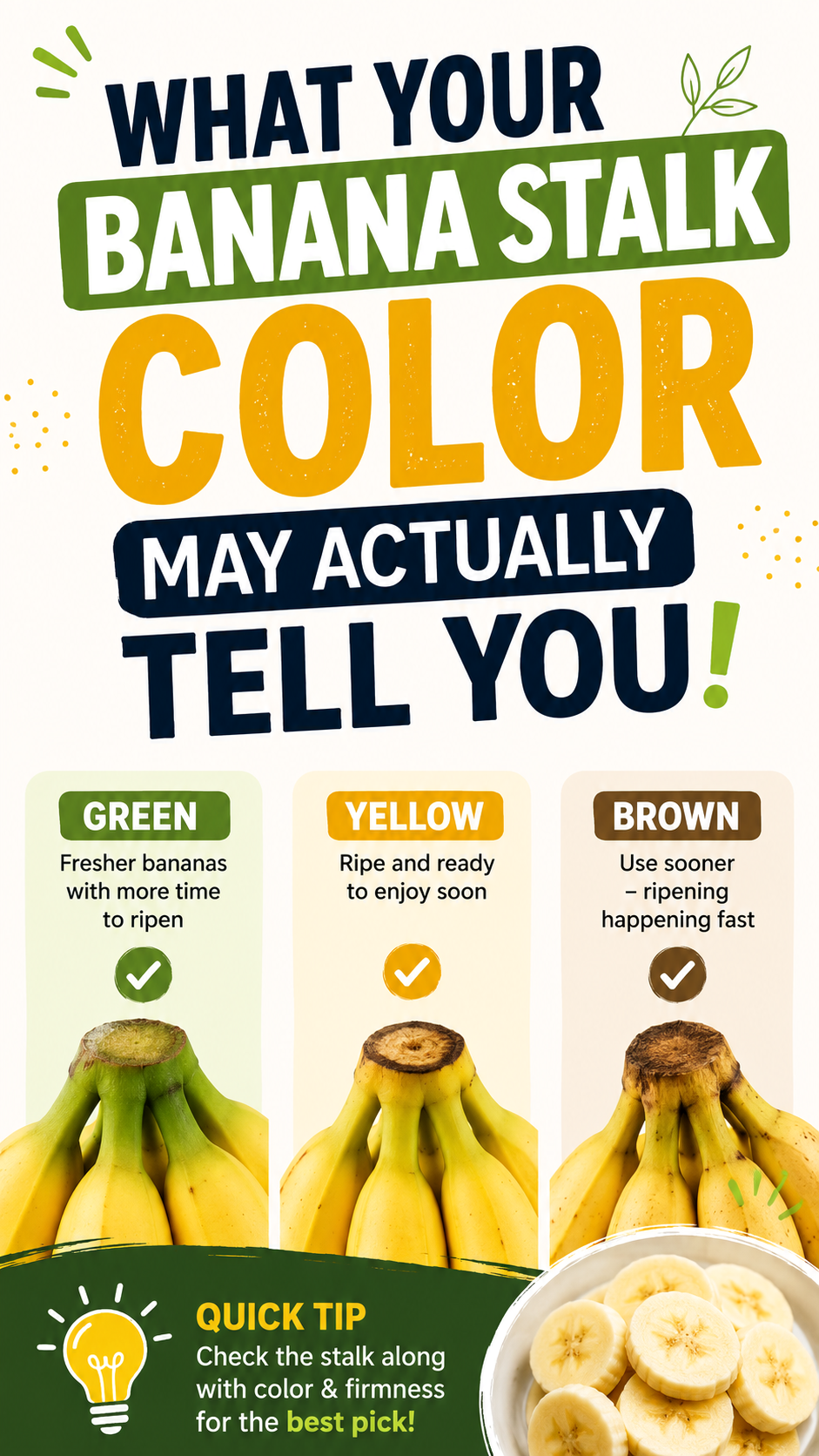
Bananas are one of the easiest fruits to grab, snack on, blend into smoothies, or bake into something cozy. Yet many people choose them by looking only at the peel. While the yellow color of the fruit can tell you a lot, the stalk, also called the stem or crown, can offer another useful clue. The color, texture, and condition of the banana stalk may help you understand freshness, ripeness, and how quickly the bananas should be used.
When you are standing in the produce aisle, a bunch of bananas can look perfectly fine at first glance. But a closer look at the top of the bunch may reveal whether the fruit is still firm and fresh, already ripening fast, or possibly past its best storage stage. This simple grocery shopping tip can help reduce food waste, improve your meal planning, and make sure you buy bananas that match how you plan to use them.
Key Takeaways
- Banana stalk color may give clues about freshness and ripening stage.
- A greener, firmer stalk often suggests bananas may have more time before they fully ripen.
- A dry, dark, or shriveled stalk can mean the bananas are maturing quickly.
- Stalk appearance should be considered along with peel color, firmness, and smell.
- Choosing bananas by ripeness level helps reduce waste and makes meal planning easier.
- Different ripeness stages are better for snacking, smoothies, baking, or freezing.
What Banana Stalk Color May Actually Tell You
The banana stalk is the thick part that holds the bunch together. It is easy to ignore, but it can be a helpful visual clue. A stalk that looks green, firm, and slightly moist may suggest that the bananas are relatively fresh and still have some ripening time ahead. A stalk that looks brown, dry, blackened, or very shriveled may suggest that the bananas are farther along in the ripening process.
This does not mean the stalk tells the whole story. Bananas continue changing after harvest, and their appearance depends on handling, storage, temperature, and natural ripening. Still, the stalk can be a quick check when you are comparing two bunches that otherwise look similar.
Important: The best way to judge banana quality is to look at the whole fruit. Check the stalk, peel color, texture, firmness, and any bruising before deciding whether the bunch is right for your needs.
Why the Stalk Matters When Choosing Bananas
The stalk is connected to the fruit’s natural ripening journey. As bananas mature, moisture loss and color changes may become more visible around the crown. This is why a bunch with fresh-looking stalks may often appear firmer and less advanced in ripeness than one with dry, dark stalks.
For everyday shoppers, this matters because bananas are often bought for different reasons. Some people want bananas ready to eat the same day. Others want fruit that will last several days on the counter. If you know what to look for, you can choose the right bunch instead of guessing.
Green or Light-Colored Stalks
A green or pale green stalk usually suggests the bananas are on the fresher side. The fruit may still be firm, and the peel may have more green or light yellow tones. These bananas are often a smart choice if you do not plan to eat them immediately.
Bananas with greener stalks can be useful for weekly grocery planning. You can buy them at the beginning of the week and let them ripen gradually. This gives you more flexibility and helps prevent the common problem of all your bananas turning soft at once.
Yellowing Stalks
A stalk that is turning yellow or light brown may indicate that the bananas are moving through the ripening process. These bananas may be good for eating within a couple of days, depending on the peel color and firmness.
If the fruit itself is bright yellow with very few spots, it may be at a pleasant snacking stage. The banana is likely sweeter than a green banana but not yet overly soft. This is often the stage many people prefer for lunchboxes, breakfast bowls, and quick snacks.
Brown or Dry Stalks
A brown, dry, or slightly shriveled stalk can suggest the bananas are riper and should be used sooner. This is not always a bad thing. In fact, ripe bananas are often sweeter, softer, and better suited for recipes where natural sweetness is helpful.
If the peel has brown spots and the stalk is dry, the bananas may be ideal for smoothies, pancakes, muffins, banana bread, or freezing for later. The key is to use them before they become mushy, fermented-smelling, or heavily damaged.
Very Dark or Blackened Stalks
A very dark stalk may mean the bananas are advanced in ripeness or have experienced rough handling or storage stress. If the peel is also heavily bruised, split, leaking, or has an unpleasant smell, it is better to skip that bunch.
However, a dark stalk alone does not always mean the banana is unusable. Some bananas may still be fine inside, especially if the peel is intact and the fruit feels only slightly soft. Use your senses and check the full condition before deciding.
How to Read Banana Ripeness Like a Pro
Looking at the stalk is helpful, but it works best when combined with other signs. Banana ripeness is a full-picture check. The peel color, firmness, scent, and surface condition all give useful information.
Check the Peel Color
Green bananas are less ripe and usually firmer. Yellow bananas are ripe and ready for everyday eating. Yellow bananas with brown speckles are sweeter and softer. Mostly brown bananas are usually best for baking, blending, or freezing rather than eating plain.
The stalk can confirm what the peel suggests. For example, a yellow banana with a greenish stalk may still have a little firmness. A yellow banana with a dry brown stalk may be ripening faster and should be used earlier.
Feel the Firmness
Firm bananas are usually less ripe. Slightly soft bananas are good for eating. Very soft bananas are better for recipes. If the banana feels mushy in spots, it may be bruised. If it feels watery or collapses when touched, it may be overripe or damaged.
Firmness is especially useful because color can sometimes be misleading. Bananas may look yellow but still feel firm, or they may look only lightly spotted but already be soft inside.
Look for Bruising or Splits
Small brown marks are normal as bananas ripen. Deep bruises, cracked peels, leaking areas, or exposed fruit are signs that the banana may spoil faster. When shopping, avoid bunches with major damage unless you plan to use them immediately for cooking or baking.
Pro Tip: If you want bananas for different days of the week, buy a mixed bunch or two small bunches at different ripeness stages. Choose some with greener stalks for later and some yellow bananas for immediate snacking.
Matching Banana Ripeness to How You Plan to Use Them
One of the best reasons to notice stalk color and ripeness is that different bananas are better for different uses. Instead of simply choosing the prettiest bunch, think about what you need the bananas for.
For Eating Fresh
For a classic snack banana, look for a bright yellow peel, minimal spotting, a firm but not hard feel, and a stalk that is not overly dry. This stage gives you a nice balance of sweetness and texture.
Fresh eating bananas are great for breakfast plates, school lunches, post-workout snacks, and quick energy during busy days. If you dislike mushy bananas, avoid bunches with very dark stalks and heavy spotting unless you plan to use them quickly.
For Smoothies
Smoothies are forgiving, so slightly riper bananas work beautifully. A peel with brown speckles and a browning stalk can be a good sign that the banana will add more sweetness and creaminess.
Ripe bananas blend well with milk, yogurt, oats, peanut butter, berries, cocoa, cinnamon, or protein powder. If you often make smoothies, let bananas ripen fully, peel them, slice them, and freeze them in small portions.
For Baking
Banana bread, muffins, pancakes, and breakfast bars usually benefit from very ripe bananas. These bananas are soft, sweet, and easy to mash. A dry brown stalk and spotted peel may be exactly what you want for baking.
The natural sweetness of ripe bananas can improve flavor and texture in many recipes. If your bananas are too ripe for snacking but still smell sweet and look safe inside, baking is a great way to avoid waste.
For Freezing
Bananas can be frozen when they are ripe and sweet. If the stalk is brown and the peel is speckled, that may be a good time to freeze them before they go too far. Peel them first, because frozen banana peels are difficult to remove.
Place slices on a tray to freeze separately, then transfer them to a freezer-safe bag or container. This makes it easy to grab only what you need for smoothies, oatmeal, homemade nice cream, or baking.
Why This Matters
Learning to read banana stalk color can help you buy fruit with a purpose. Instead of bringing home bananas that ripen too quickly or stay too green for your plans, you can choose the bunch that fits your week, your recipes, and your preferred texture.
Common Mistakes People Make When Buying Bananas
Bananas seem simple, but a few small shopping mistakes can lead to wasted fruit or disappointing texture. Paying attention to stalk color can help, but it is just one part of smarter produce selection.
Choosing Only Perfect Yellow Bananas
Perfect yellow bananas are appealing, but they may all ripen at the same time. If you buy a large bunch that is already fully yellow, you may need to eat them quickly. For a longer-lasting supply, choose bananas that are slightly green or buy multiple ripeness stages.
Ignoring the Stalk
The stalk can reveal clues that the peel alone may not show. A dry, dark stalk may suggest that the bunch has been ripening longer or may need to be used sooner. A fresh-looking green stalk may suggest more time before peak ripeness.
Buying Too Many at Once
Bananas are affordable and easy to use, so it is tempting to buy a large bunch. But if your household only eats a few per week, buying too many ripe bananas can lead to waste. Smaller bunches or mixed ripeness levels are often more practical.
Storing Bananas Incorrectly
Bananas continue ripening at home. Warm kitchens, sunlight, and nearby ripening fruit can speed up the process. If your bananas are already ripe, move them away from heat and consider refrigerating them once they reach your preferred stage. The peel may darken in the fridge, but the inside can stay usable longer.
How to Store Bananas Based on Ripeness
Good storage can make a big difference. Once you understand what banana stalk color may tell you, the next step is knowing how to slow down or speed up ripening at home.
If Bananas Are Too Green
Leave green bananas at room temperature. Keep them on the counter, away from direct sunlight. If you want them to ripen faster, place them near other ripening fruit or in a loosely closed paper bag. Check them daily so they do not pass your ideal stage.
If Bananas Are Perfectly Ripe
Once bananas are yellow and ready to eat, keep them in a cool part of the kitchen. Separate them from other fruit if you want to slow ripening. Some people also separate individual bananas from the bunch, which may help them ripen more evenly and make it easier to use them one at a time.
If Bananas Are Getting Too Ripe
When bananas become speckled and soft, decide quickly how you want to use them. Eat them, blend them, bake with them, refrigerate them, or freeze them. Waiting too long can turn a useful ripe banana into food waste.
Important: Do not rely on stalk color alone to decide whether a banana is safe to eat. If the banana has a sour smell, leaking liquid, mold, or an unusual texture inside, discard it.
What Different Banana Stages Are Best For
Understanding banana stages can make your kitchen routine easier. Here is a simple way to match appearance with use.
Green Bananas
Green bananas are firmer and less sweet. They are best for people who prefer a less sugary taste or want bananas that will last several days. The stalk is often greener and fresher-looking at this stage.
Mostly Yellow Bananas
Mostly yellow bananas are great for everyday snacking. They are sweet enough to enjoy plain but still firm enough to slice cleanly. This stage is ideal for cereal, yogurt bowls, lunchboxes, and simple fruit plates.
Speckled Bananas
Speckled bananas are sweeter and softer. They are excellent for smoothies, oatmeal, pancakes, and quick desserts. If the stalk is turning brown but the fruit still smells fresh, this can be a very useful stage.
Very Ripe Bananas
Very ripe bananas are best for banana bread, muffins, blended treats, and freezer prep. They may not look perfect, but they can be full of flavor. As long as they are not spoiled, they are often the most useful bananas for baking.
Simple Grocery Shopping Strategy for Bananas
Next time you shop for bananas, think about timing. Ask yourself when you plan to eat them. This one question can help you choose the right stalk color and ripeness stage.
- For today: Choose yellow bananas that feel slightly firm and smell fresh.
- For the next few days: Choose bananas with some green near the peel and fresher-looking stalks.
- For baking soon: Choose spotted bananas with softer texture and browning stalks.
- For smoothies: Choose ripe or speckled bananas, then freeze extras before they spoil.
This approach turns banana buying into a simple plan rather than a guessing game. It also helps you avoid buying fruit that does not match your schedule.
How Banana Stalk Clues Can Reduce Food Waste
Food waste often happens because produce ripens faster than expected. Bananas are a common example because they can move from firm to soft quickly, especially in warm kitchens. Noticing stalk color can help you estimate how soon you need to use them.
When you bring home bananas with darker, drier stalks, plan to eat or cook with them sooner. When the stalks are greener and the bananas are firmer, you can save them for later in the week. This small habit can make your grocery routine more intentional.
Pro Tip: Create a simple banana plan after grocery shopping. Keep one or two bananas out for snacking, move ripe extras into the fridge, and freeze any that are becoming too soft for fresh eating.
When a Banana Is Still Good and When to Toss It
Ripe bananas can look imperfect and still be perfectly useful. Brown speckles, a dry stalk, and soft texture do not automatically mean a banana is bad. Many ripe bananas are excellent for recipes.
However, there are times when it is better to discard a banana. Mold, leaking liquid, a fermented or unpleasant smell, major peel splits, or an unusual slimy texture are signs that the banana should not be used. Trust your senses and avoid taking chances with spoiled fruit.
Good Signs
- Sweet banana smell
- Intact peel
- Soft but not watery texture
- Normal brown speckles
- Fruit inside looks creamy and fresh
Warning Signs
- Mold on the peel, stalk, or fruit
- Sour or fermented odor
- Leaking liquid
- Very mushy or slimy interior
- Large splits exposing the fruit
At a Glance
- Green stalks may suggest fresher, less ripe bananas.
- Brown or dry stalks may suggest bananas should be used sooner.
- Peel color and firmness matter just as much as stalk appearance.
- Ripe bananas are useful for smoothies, baking, and freezing.
- Discard bananas with mold, leaking, or unpleasant smells.
Conclusion: A Small Detail That Can Change How You Buy Bananas
Banana stalk color may seem like a tiny detail, but it can be surprisingly helpful when choosing fruit. A greener, firmer stalk may point to bananas that need more time to ripen, while a darker or drier stalk may suggest the bunch is maturing quickly. When combined with peel color, firmness, and overall condition, this simple clue can help you make smarter grocery choices.
Whether you want bananas for snacking, smoothies, baking, or freezing, reading the stalk can help you choose the right bunch for your plans. It is an easy habit that supports better food storage, less waste, and more confidence in the kitchen. The next time you reach for bananas, take a quick look at the top of the bunch before placing it in your cart.
Tags
Banana Ripeness Banana Stalk Color Fruit Storage Tips Produce Freshness Grocery Shopping Tips Kitchen Hacks Food Waste Reduction