
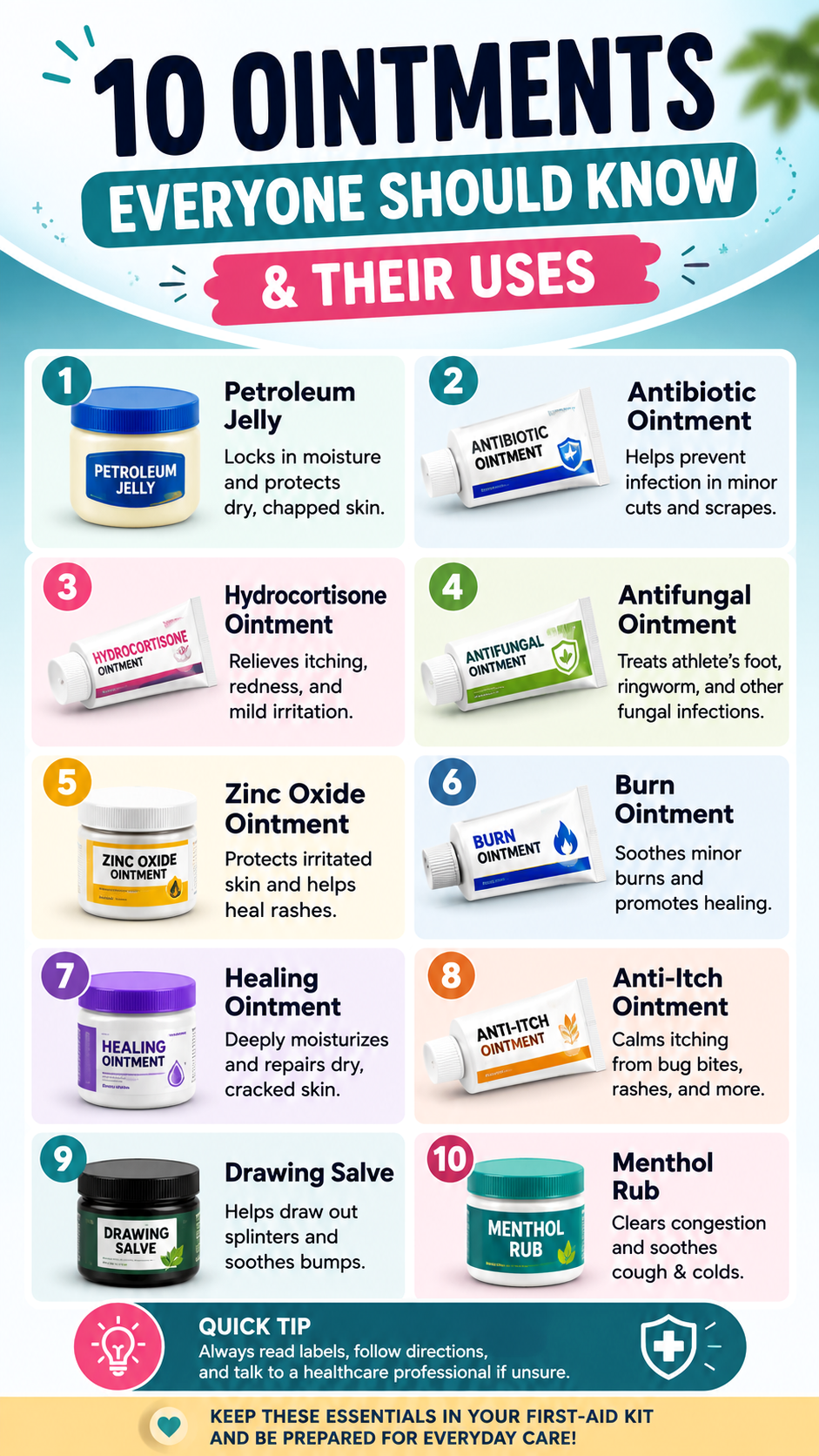
A well-stocked medicine cabinet can make everyday skin concerns feel a lot less stressful. From dry patches and minor scrapes to irritated skin and simple first-aid needs, ointments are some of the most practical products to keep at home. They are usually thicker than creams or lotions, which helps them create a protective layer on the skin while supporting comfort, moisture, and healing.
Understanding common ointments does not mean replacing professional medical care. It simply helps you make smarter, calmer choices when a small skin issue comes up. Whether you are organizing a home first-aid kit, learning basic wound care, or trying to understand what different ointments are commonly used for, this guide breaks everything down in simple, everyday language.
Key Takeaways
- Ointments are thicker than creams and help protect the skin barrier.
- Different ointments are used for dryness, minor cuts, burns, irritation, or infection prevention.
- Always read labels carefully before using any medicated ointment.
- Some ointments are best for short-term use only, especially steroid or antibiotic products.
- A simple home first-aid kit can include a few versatile ointments for everyday needs.
What Makes an Ointment Different?
Ointments are semi-solid topical products designed to sit on the surface of the skin. Unlike lightweight lotions that absorb quickly, ointments often feel richer and more protective. This texture can be helpful when the skin needs a barrier against dryness, friction, or outside irritation.
Many ointments use a petrolatum, mineral oil, or wax-like base. This helps seal moisture into the skin and can reduce water loss. Some ointments are plain moisturizers, while others contain active ingredients such as antibiotics, antifungals, anti-itch agents, or mild steroids.
Important: Not every ointment is meant for every skin problem. A moisturizing ointment may be safe for frequent use, but medicated ointments should be used exactly as directed on the label or by a healthcare professional.
Why Everyone Should Know Basic Ointment Uses
Small skin issues happen often. A cracked cuticle, a scraped knee, a dry elbow, a bug bite, or a patch of irritation can appear without warning. Knowing the difference between common ointments helps you respond quickly and avoid using the wrong product.
This kind of knowledge is especially useful for families, caregivers, students, travelers, and anyone who wants to keep a practical first-aid kit. It can also help prevent overuse of stronger products, such as antibiotic ointments or hydrocortisone, when a simple protective balm may be enough.
10 Ointments Everyone Should Know
The following ointments are commonly found in homes, pharmacies, and first-aid kits. Their uses can vary by brand and formulation, so always check the product label before applying anything to your skin.
1. Petroleum Jelly Ointment
Petroleum jelly is one of the most versatile ointments to keep at home. It is often used to protect dry, cracked, or chafed skin. Because it forms a barrier, it helps lock in moisture and shield the skin from friction.
Common uses include dry lips, rough heels, minor skin cracks, and areas prone to rubbing. It can also be used around the nose during cold season when frequent wiping makes the skin sore.
Best For
- Dry lips and cracked skin
- Chafing protection
- Moisture sealing after hand washing
- Protecting minor superficial scrapes
2. Antibiotic Ointment
Antibiotic ointments are commonly used for minor cuts, scrapes, and small wounds to help reduce the chance of bacterial contamination. They are usually applied after cleaning the area gently with water.
These ointments should not be used on deep wounds, serious burns, animal bites, or large areas of broken skin unless a medical professional recommends it. Overuse can sometimes cause irritation or allergic reactions, so moderation matters.
Pro Tip: For a small scrape, cleaning the area well is just as important as the ointment. A thin layer is usually enough, followed by a clean bandage if needed.
3. Hydrocortisone Ointment
Hydrocortisone ointment is a mild topical steroid often used for temporary itching, redness, and inflammation. It may be helpful for certain rashes, insect bites, or mild skin irritation.
This type of ointment is usually meant for short-term use. It should not be applied near the eyes, on open wounds, or on suspected infections unless directed by a professional. If irritation gets worse or does not improve, it is best to seek medical advice.
Best For
- Temporary itch relief
- Mild irritation
- Bug bites
- Small areas of redness
4. Antifungal Ointment
Antifungal ointments are designed for skin concerns caused by fungi, such as athlete’s foot, ringworm, or certain yeast-related rashes. They usually contain active ingredients that target fungal growth.
Because fungal conditions can look similar to other rashes, it is important to use the right product for the right problem. If a rash spreads, becomes painful, or does not improve after proper use, professional guidance is recommended.
Why This Matters
Using a steroid ointment on a fungal rash may make the problem look calmer at first while allowing it to worsen underneath. Matching the ointment to the skin concern is one of the most important parts of basic skincare and first aid.
5. Zinc Oxide Ointment
Zinc oxide ointment is known for its protective barrier effect. It is commonly used for diaper rash, friction irritation, and moisture-related skin discomfort. It creates a visible layer that helps shield the skin from wetness and rubbing.
This ointment is especially helpful in areas where skin is exposed to sweat, moisture, or repeated contact. It is thick, so a small amount can go a long way.
6. Burn Ointment
Burn ointments are made to soothe minor burns, such as small kitchen burns or mild heat irritation. Some formulas focus on cooling comfort, while others help keep the area moist and protected.
For minor burns, cooling the area under cool running water is usually the first step. Avoid applying butter, oils, or harsh home remedies. Serious burns, blistering over a large area, chemical burns, or burns on the face, hands, feet, or genitals need medical attention.
Important: A burn ointment is only appropriate for minor burns. If the burn is deep, very painful, large, or showing signs of infection, do not rely on home treatment alone.
7. Healing Ointment for Dry Skin
Healing ointments for dry skin are often formulated with ingredients that support the skin barrier, such as petrolatum, ceramides, panthenol, or soothing moisturizers. These products are useful for very dry hands, elbows, knees, and cracked patches.
They are often best applied after bathing or hand washing, while the skin is still slightly damp. This helps trap moisture and reduce roughness. Many people use them overnight with cotton gloves or socks for extra hydration.
Best For
- Rough hands
- Dry elbows and knees
- Cracked heels
- Winter dryness
8. Anti-Itch Ointment
Anti-itch ointments are designed to calm uncomfortable itching from minor irritations, bug bites, or dry skin. Some contain soothing ingredients, while others include active anti-itch compounds.
Itching can have many causes, so pay attention to the pattern. A small mosquito bite is different from a spreading rash, hives, or severe allergic reaction. If itching comes with swelling, breathing trouble, fever, or widespread rash, seek medical help quickly.
9. Drawing Salve or Ichthammol Ointment
Drawing salves are traditional ointments sometimes used for minor skin irritations, splinters, or small bumps. Ichthammol ointment is one commonly known type. It has a strong smell and dark color, so it is usually covered with a bandage after application.
These products should be used carefully. They are not a solution for deep infections, severe pain, or worsening swelling. Any skin bump that becomes hot, red, increasingly painful, or filled with pus should be evaluated by a healthcare professional.
10. Menthol or Medicated Chest Rub Ointment
Menthol-based ointments and chest rubs are commonly used for a cooling sensation and comforting aroma. Many people associate them with cold season routines, especially when applied to the chest or throat area according to label directions.
These ointments should not be placed inside the nose, near the eyes, or on broken skin. They may not be suitable for very young children, depending on the product, so checking the age guidance on the label is essential.
How to Use Ointments Safely
Using ointments correctly can make them more effective and reduce the chance of irritation. The most important habit is to read the label every time, even if the product looks familiar. Ingredients, age recommendations, and directions can vary from one brand to another.
Start With Clean Skin
Before applying ointment, gently clean the area when appropriate. For minor cuts or scrapes, rinse with clean water and pat dry with a clean towel or gauze. Avoid harsh scrubbing, which can make irritation worse.
Use a Thin Layer
More ointment does not always mean better results. A thin, even layer is usually enough for most topical products. Thick over-application can feel greasy, stain clothing, or trap too much moisture in certain areas.
Avoid Sharing Tubes or Jars
To keep ointments clean, avoid touching the product directly with dirty fingers. Use clean hands, a cotton swab, or a clean applicator. Do not share medicated ointments with others unless advised, especially if the product is being used on irritated or broken skin.
Pro Tip: Write the opening date on medicated ointments when you add them to your first-aid kit. This makes it easier to keep track of freshness and replace products when needed.
What to Keep in a Simple Home First-Aid Kit
You do not need a crowded medicine cabinet to be prepared. A few carefully chosen items can cover many everyday situations. Along with ointments, include basic supplies like adhesive bandages, sterile gauze, medical tape, tweezers, disposable gloves, and a digital thermometer.
A Practical Ointment Starter Set
- Petroleum jelly or a plain healing ointment for dryness and barrier protection
- Antibiotic ointment for minor cuts and scrapes when appropriate
- Hydrocortisone ointment for short-term itch or irritation relief
- Zinc oxide ointment for moisture and friction protection
- Antifungal ointment for common fungal skin concerns
This simple selection gives you a balanced starting point without filling your cabinet with products you may never use.
Common Mistakes to Avoid
Even familiar ointments can cause problems when used incorrectly. One of the biggest mistakes is using a medicated ointment for too long. Another is applying the wrong product to a rash without knowing the cause.
It is also important not to cover every skin issue with thick ointment. Some conditions need air flow, medical treatment, or a different type of product. When in doubt, especially with children, sensitive skin, or recurring irritation, it is better to ask a pharmacist or healthcare provider.
Watch for Warning Signs
Stop using an ointment and seek advice if you notice worsening redness, swelling, warmth, pus, severe pain, spreading rash, or signs of an allergic reaction. Skin changes that do not improve after proper care should not be ignored.
At a Glance
- Use plain barrier ointments for dryness and protection.
- Use medicated ointments only as directed.
- Clean minor wounds before applying any topical product.
- Do not use ointments on serious burns, deep wounds, or spreading infections without medical advice.
- Replace expired products in your first-aid kit regularly.
Conclusion: A Smarter Medicine Cabinet Starts With Simple Knowledge
Ointments may seem basic, but they can be incredibly useful when you understand what they are meant to do. A plain protective ointment can help dry, cracked skin. An antibiotic ointment may support care for minor scrapes. Hydrocortisone can calm temporary itching, while antifungal ointment targets specific fungal concerns. Zinc oxide, burn ointments, anti-itch products, drawing salves, and menthol rubs each have their own place when used correctly.
The key is not to collect every product on the shelf. The goal is to know the basics, choose wisely, and use each ointment safely. With a few reliable options and a little first-aid awareness, your home medicine cabinet can become more organized, practical, and ready for everyday skin needs.
Tags
Ointment Uses First Aid Basics Medicine Cabinet Skin Care Tips Home Health Dry Skin Relief Minor Cuts Everyday Wellness