
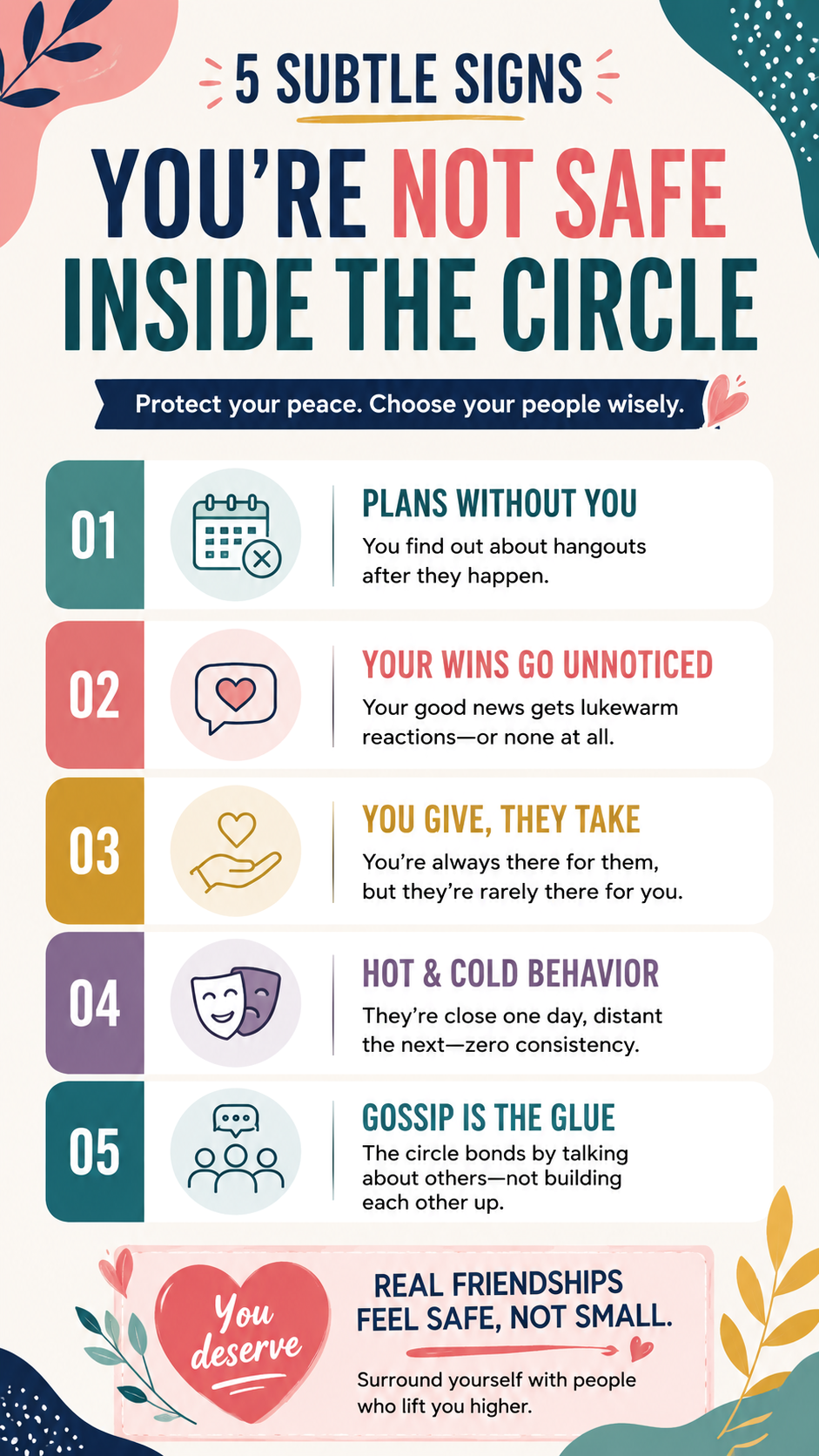
Friendships are often portrayed as safe, supportive spaces where trust, encouragement, and mutual respect naturally thrive. Yet not every social circle operates that way. Sometimes, subtle patterns emerge that leave one person feeling overlooked, undervalued, or emotionally exhausted. These experiences can be confusing because the signs are rarely dramatic. Instead, they show up through recurring behaviors, unequal dynamics, and unspoken social hierarchies that slowly affect confidence and emotional well-being.
Understanding friendship hierarchies is not about becoming suspicious of everyone around you. It is about recognizing patterns, protecting your emotional health, and creating room for relationships built on genuine care. When you learn to identify unhealthy dynamics, you become better equipped to invest your time and energy in friendships that feel reciprocal, supportive, and emotionally safe.
Key Takeaways
- Healthy friendships are built on reciprocity and mutual respect.
- Repeated exclusion often signals an unhealthy social dynamic.
- Supportive friends celebrate your successes without resentment.
- Consistency matters more than occasional grand gestures.
- Clear boundaries help protect emotional well-being.
- Recognizing patterns early can prevent long-term emotional stress.
What Are Friendship Hierarchies?
A friendship hierarchy exists when social relationships within a group become uneven in ways that consistently benefit some members while leaving others feeling less important. Every social group naturally has varying levels of closeness, but problems arise when these differences create patterns of exclusion, favoritism, or emotional imbalance.
In healthy groups, people may be closer to certain friends while still treating everyone with respect and consideration. In unhealthy groups, however, status, influence, and social positioning often determine who gets included, listened to, and prioritized.
Important: Feeling excluded once or twice does not automatically indicate a toxic friendship. The key is identifying recurring patterns that consistently leave you feeling unseen, undervalued, or emotionally unsafe.
Sign #1: You Learn About Plans After They Happen
One of the clearest indicators of an unhealthy friendship dynamic is consistently discovering events, gatherings, or activities after they have already occurred. While occasional oversights happen, repeated exclusion tells a different story.
If you’re regularly hearing about dinners, outings, celebrations, or group activities after the fact, it may suggest that you’re being treated as a peripheral member rather than a valued participant.
What Healthy Inclusion Looks Like
In healthy friendships, people check in before finalizing plans whenever possible. Even when scheduling conflicts arise, there is a clear effort to make everyone feel considered and included.
- Friends reach out before making group decisions.
- Invitations are extended consistently.
- Your presence is valued rather than treated as optional.
- Communication remains transparent and respectful.
If exclusion becomes a recurring pattern, it may be worth evaluating whether the friendship is truly reciprocal.
Sign #2: Your Successes Receive Lukewarm Reactions
True friends celebrate each other’s achievements. Whether it’s a promotion, personal milestone, academic accomplishment, or exciting life update, supportive friendships create space for shared joy.
When your good news consistently receives minimal enthusiasm, awkward silence, dismissive comments, or immediate comparisons, it can indicate deeper issues within the relationship.
Why Comparison Damages Friendships
Comparison often shifts attention away from genuine connection. Instead of celebrating someone’s success, the focus becomes competition, insecurity, or status.
Healthy friends are capable of being proud of your accomplishments while still pursuing their own goals. They don’t view your growth as a threat.
Why This Matters
- Supportive reactions strengthen trust and emotional safety.
- Celebration creates deeper connection and mutual respect.
- Repeated jealousy can slowly erode friendship quality.
Pro Tip: Share major news with people who consistently celebrate your growth. Their response often reveals more about the health of the friendship than the words themselves.
Sign #3: You’re Valued Mainly for What You Give
Some friendships become one-sided over time. You may be the person everyone calls during a crisis, seeks advice from, or relies on for emotional support. While helping friends is part of healthy relationships, problems arise when support flows in only one direction.
If your role is always that of the helper, listener, organizer, or problem solver, you may be contributing more emotional labor than you’re receiving.
The Importance of Reciprocity
Healthy friendships involve mutual care. Both people feel seen, supported, and appreciated. The balance does not need to be perfectly equal every day, but over time there should be a natural exchange of emotional investment.
- You feel comfortable asking for help.
- Support goes both ways.
- Your needs are acknowledged.
- Friends show genuine concern for your well-being.
When giving becomes your primary value within a friendship, resentment and emotional exhaustion often follow.
Sign #4: Warm and Cold Behavior Creates Confusion
Inconsistent behavior can be one of the most emotionally draining aspects of an unhealthy friendship. One day someone is attentive, affectionate, and supportive. The next day they become distant, dismissive, or unavailable without explanation.
This unpredictability often leaves people questioning themselves rather than examining the relationship pattern.
How Emotional Inconsistency Affects You
When affection and attention become unpredictable, people naturally begin seeking approval and clarity. This dynamic can create anxiety and uncertainty, making it difficult to trust the relationship.
Healthy friendships are not perfect, but they are generally consistent. Disagreements happen, misunderstandings occur, and busy periods arise. The difference is that emotionally safe people communicate openly rather than creating confusion.
Important: Consistency is often a stronger indicator of trustworthiness than occasional displays of affection. Reliable behavior creates emotional security over time.
Sign #5: The Group Bonds Through Talking About Others
Every social group discusses people from time to time. However, when gossip becomes the primary source of connection, it often reveals deeper issues within the group culture.
If conversations regularly revolve around criticizing, mocking, judging, or dissecting absent friends, it raises important questions about trust and emotional safety.
The Hidden Cost of Gossip-Centered Relationships
Groups that bond through negativity often struggle to create meaningful connection. Members may feel pressure to participate in conversations that conflict with their values. Over time, trust erodes because everyone realizes they could become the next topic of discussion.
Healthy groups typically connect through shared interests, experiences, goals, humor, and values rather than criticism of others.
- Conversations feel uplifting.
- People respect boundaries.
- Disagreements remain constructive.
- Trust is prioritized over entertainment.
How to Respond Without Creating Drama
Recognizing unhealthy friendship patterns does not require immediate confrontation or dramatic exits. Often, the most effective approach is thoughtful observation combined with intentional action.
Observe Patterns Over Time
Instead of focusing on isolated incidents, look for repeated behaviors. Consistency reveals far more about a relationship than individual moments.
Communicate Clearly
If a friendship feels important, consider addressing concerns directly. Calm, respectful conversations can often clarify misunderstandings and strengthen relationships.
Strengthen Supportive Connections
Invest more energy in people who demonstrate reliability, kindness, and genuine interest in your well-being. Strong friendships often grow through consistent mutual effort.
Set Healthy Boundaries
Boundaries are not punishments. They are tools that protect your emotional health and help create more balanced relationships.
Examples include:
- Limiting participation in gossip.
- Reducing emotional overgiving.
- Communicating expectations clearly.
- Choosing where to invest your time and energy.
Characteristics of Emotionally Safe Friendships
While it’s important to recognize unhealthy dynamics, it’s equally valuable to understand what healthy friendships actually look like.
Mutual Respect
Both people value each other’s opinions, boundaries, and individuality.
Consistent Communication
Communication remains honest and relatively predictable, even during challenges.
Shared Joy
Successes are celebrated rather than minimized or compared.
Emotional Reciprocity
Support flows naturally in both directions over time.
Trust and Safety
People feel comfortable being authentic without fear of judgment, exclusion, or manipulation.
At a Glance
- Notice recurring patterns rather than isolated incidents.
- Healthy friendships include reciprocity and support.
- Consistent exclusion deserves attention.
- Boundaries strengthen emotional well-being.
- Invest in relationships that feel safe and respectful.
Conclusion
Friendship should contribute to your sense of belonging, not leave you constantly questioning your value. While every relationship experiences occasional misunderstandings and challenges, recurring patterns of exclusion, comparison, inconsistency, and one-sided support deserve attention.
The goal is not perfection. The goal is awareness. By recognizing subtle friendship hierarchies and understanding what healthy relationships look like, you can make more intentional choices about where you invest your time, trust, and emotional energy.
Strong friendships are built on mutual respect, shared joy, honest communication, and genuine care. When those qualities are present, connection feels secure rather than confusing. Protecting your peace is not selfish. It is an important part of building a healthier and more fulfilling social life.
Tags
Female Friendships Friendship Boundaries Healthy Relationships Emotional Wellbeing Personal Growth Social Dynamics Self Worth Relationship Advice